
There is something quietly remarkable about a breakfast that has survived centuries without needing an update. No rebranding, no artisanal reinvention, no menu description listing provenance or technique. Just bread, olive oil, tomatoes, and salt. Hobz biz-zejt is exactly that, and most mornings in Malta, it still does the job better than almost anything else on offer.
The name translates directly: hobz is bread, zejt is oil. Simple enough. But like most things in Maltese food culture, the simplicity is slightly misleading. There is a specific way this works, a specific texture and ratio that separates a good hobz biz-zejt from a mediocre one, and most locals would be able to tell you exactly where the line falls.
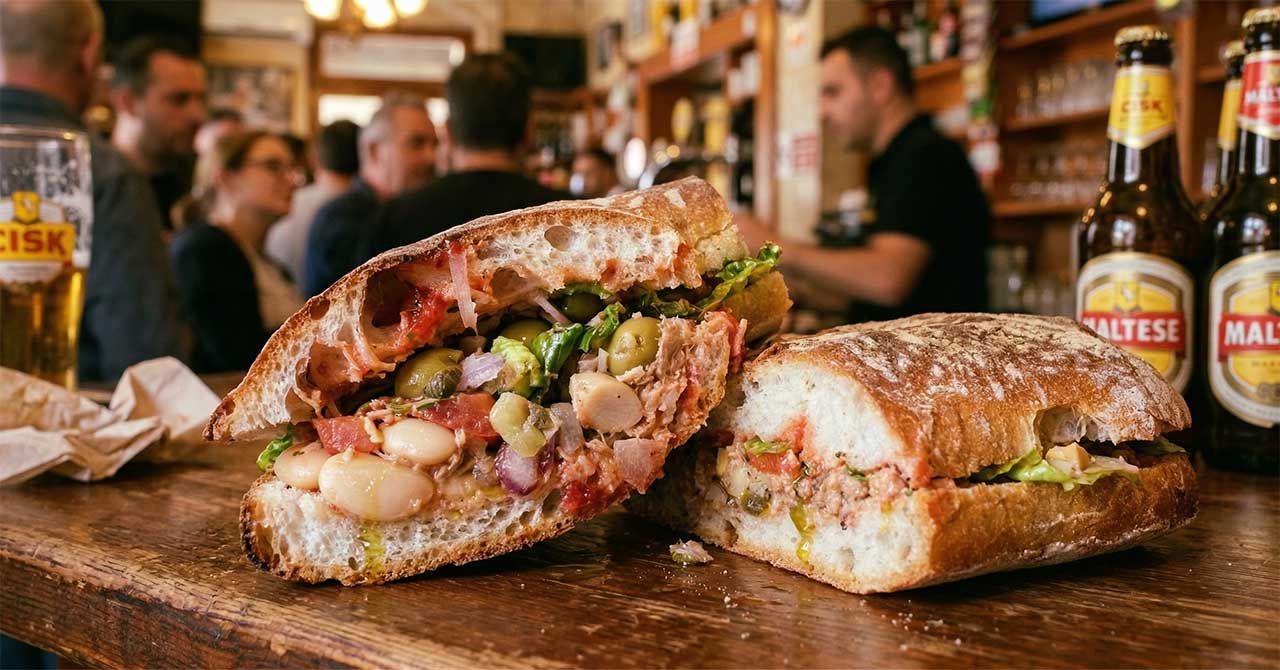
At its core, hobz biz-zejt [although sometimes called a ‘ftira’] is a thick slice of Maltese bread rubbed with a ripe tomato until the flesh soaks into the crumb, drizzled generously with olive oil, and seasoned with salt. From there, it opens up. Tuna, olives, capers, bigilla (a broad bean paste), sliced onion, mint, and fresh basil are all common additions. Some people keep it stripped back; others build it into something closer to a proper meal.
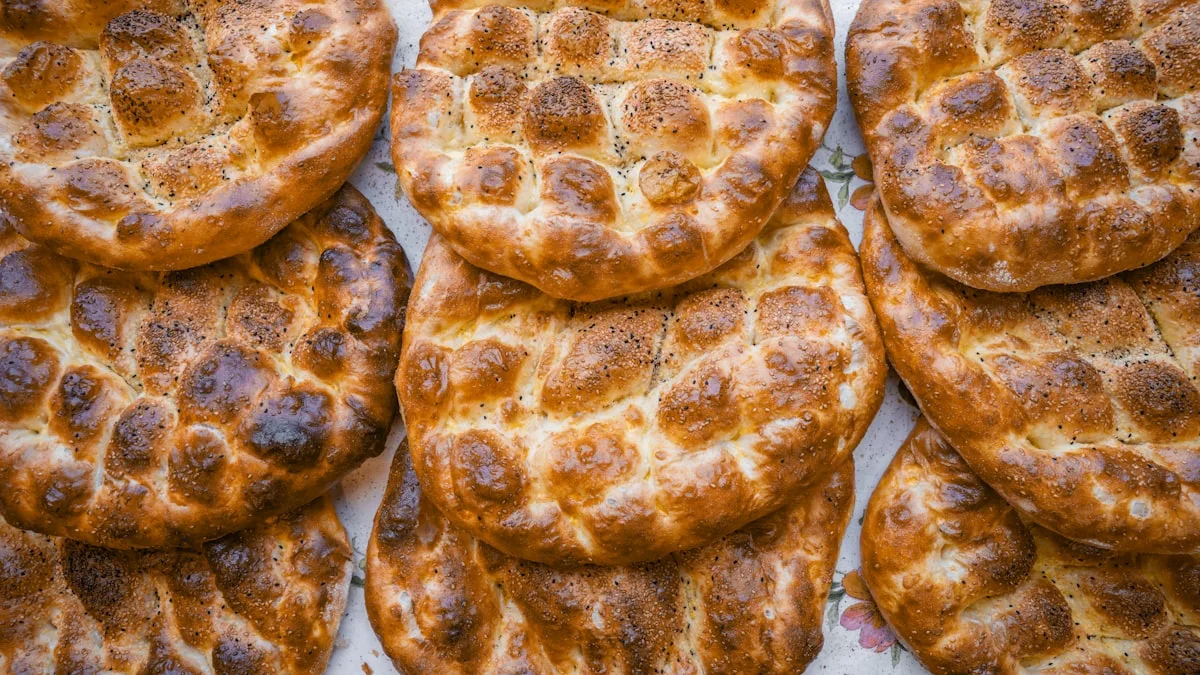
The bread itself matters enormously. The traditional Maltese loaf, known as hobza, has a dense, chewy crumb and a hard crust that holds up under moisture without collapsing. It is not the same as a sourdough, though there are similarities. It is baked in a specific shape, with a distinctive ridge along the top, and it absorbs the tomato and oil rather than drowning in them. Substituting a soft supermarket loaf is technically possible but defeats much of the point.
The tomato is not sliced and placed on top. It is cut in half and physically rubbed against the bread’s surface until it breaks down and disappears into the crumb. This is important. It distributes the flavour evenly and changes the texture of the bread in a way that simply topping it with chopped tomato never would. The technique is everything here.
There is a tendency to assume that a good breakfast needs to be complex. High-protein formulas, elaborate egg preparations, smoothie bowls arranged by colour. These things have their place, but the assumption that complexity equals quality is worth scrutinising. Hobz biz-zejt pushes back against that idea without even trying.
The combination of slow-releasing carbohydrates from the dense bread, healthy fats from the olive oil, and light acidity from the tomato is genuinely well-balanced. Add tuna for protein and capers for a sharp counterpoint, and you have a complete meal that takes under five minutes to prepare. It is also remarkably easy on the stomach first thing in the morning, which cannot be said for every traditional breakfast.
There is also a seasonal logic to it. Malta in summer is warm by seven in the morning. The idea of eating something hot and heavy is instinctively unappealing. Hobz biz-zejt is served at room temperature, which makes it suited to warm climates in a way that, say, a full cooked breakfast simply is not. Food cultures tend to evolve around practical necessity, and this one is no exception.
Malta is a small island that has been occupied, influenced, and shaped by a long list of foreign powers: Phoenicians, Romans, Arabs, Normans, Knights of St John, the French, the British. The food reflects this layered history. Hobz biz-zejt bears traces of North African and southern Mediterranean influences, particularly in the use of olive oil and the style of bread. Yet it is distinctly Maltese in its execution and in the way people relate to it.
Ask a Maltese person about this dish and the response is rarely neutral. There is usually a memory attached to it: a grandmother’s kitchen, a Sunday morning before church, a packed lunch eaten on a fishing boat. Food that carries this kind of personal weight tends to survive not just because it tastes good, but because it connects people to something larger than the meal itself. That is a durable quality.
This is also not a restaurant dish, or at least it was not historically. It belongs to the domestic morning, to bakeries that open early, to pastizzerias where you might pick up fresh bread on the way home from somewhere. The fact that it has now appeared on café menus and in food guides says something about how perceptions of “simple” food have shifted globally, but the dish itself has not changed to accommodate that attention.
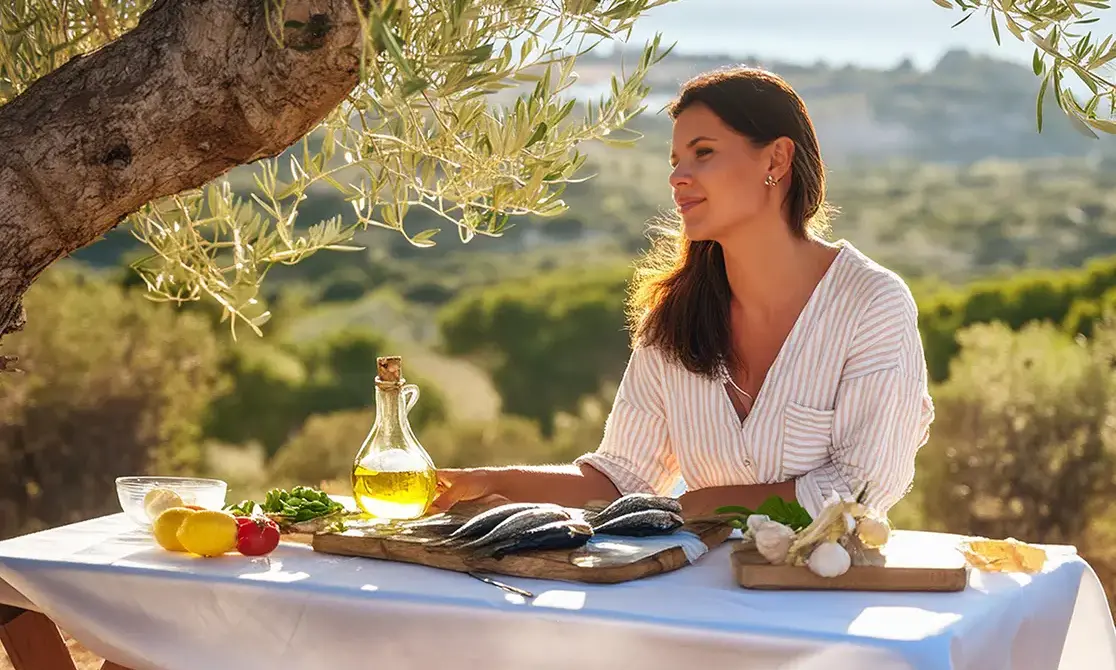
Olive oil is not a background ingredient in hobz biz-zejt. It is structural. The quality of the oil shapes the entire experience in a way that is difficult to overstate. A grassy, slightly bitter Maltese or Sicilian oil will produce a completely different result than a mild, low-quality supermarket version. The bread absorbs the oil deeply, so every characteristic of the oil, good or bad, is amplified.
Malta does produce its own olive oil, though the quantity is limited. The olives grown on the island tend to produce a relatively robust, peppery oil that holds its own against the acidity of the tomato. Many households keep a specific bottle for this dish specifically, which tells you something about how seriously people take the ingredient balance.
Using a decent extra virgin olive oil is not optional here; it is the difference between something that works and something that genuinely sings. This is one of those situations where “good enough” ingredients produce a noticeably worse result, not just a marginally inferior one.
The obvious limitation for anyone outside the island is sourcing the right bread. Maltese bread is not widely exported, though some Maltese bakeries operating in the UK and Australia do produce reasonable versions. In the absence of the real thing, a good Italian ciabatta or a dense sourdough with a firm crust will get you reasonably close. The key characteristic to look for is a crumb that resists sogginess; you need structure, not softness.
The tomatoes should be ripe to the point of being almost overripe. A firm, pale supermarket tomato will not break down properly against the bread and will not release enough juice and flesh to do the job. A vine-ripened tomato left on the counter for a day or two longer than feels comfortable is closer to what you want.
Beyond that, the additions are straightforward. Good canned tuna in olive oil, Kalamata olives, Maltese capers (smaller and more intense than the Italian varieties), fresh herbs, and a few thin rings of white onion if you want the sharper edge. The whole thing should be assembled and eaten immediately. It does not keep well, and it does not need to.
Hobz biz-zejt is not a complex dish, but thinking about why it works well is surprisingly instructive. Every component is doing real work. Nothing is decorative. The bread provides structure, the tomato provides moisture and acidity, the oil provides richness, the salt amplifies everything else. Remove or reduce any one of these and the whole thing becomes less coherent. That kind of precise interdependence is harder to achieve than it looks.
There is also something worth sitting with in the idea that this dish has required no innovation to remain relevant. No chef has needed to reimagine it. No food trend has needed to validate it. It simply does what it does, reliably, across generations. That kind of quiet persistence is rarer than it should be, in food and probably elsewhere too.
Perhaps the most useful question this raises is not about hobz biz-zejt at all, but about what else we routinely complicate beyond the point of necessity. Sometimes the oldest version of something is not a starting point for improvement. Sometimes it is just the answer, already arrived at, waiting patiently for us to stop fiddling with it.

At Med.kitchen, our passion lies in crafting exceptional culinary experiences through our online platform. We specialise in sharing a wealth of knowledge via articles, recipes, courses, and online mentoring, aiming to inspire both novice and seasoned chefs alike. Our focus has shifted from private dining to being an online source of gastronomic inspiration, allowing you to explore and refine your culinary skills from the comfort of your home..