
There is a particular kind of morning that belongs entirely to the Levant. The air is still cool, the bread oven is already hot, and somewhere between the first call to prayer and the school run, a flatbread emerges from the bakery counter carrying the scent of thyme, olive oil, and toasted sesame. That flatbread is man’oushe, and if you have never encountered it, you have been missing one of the most quietly extraordinary breakfast foods on the planet.
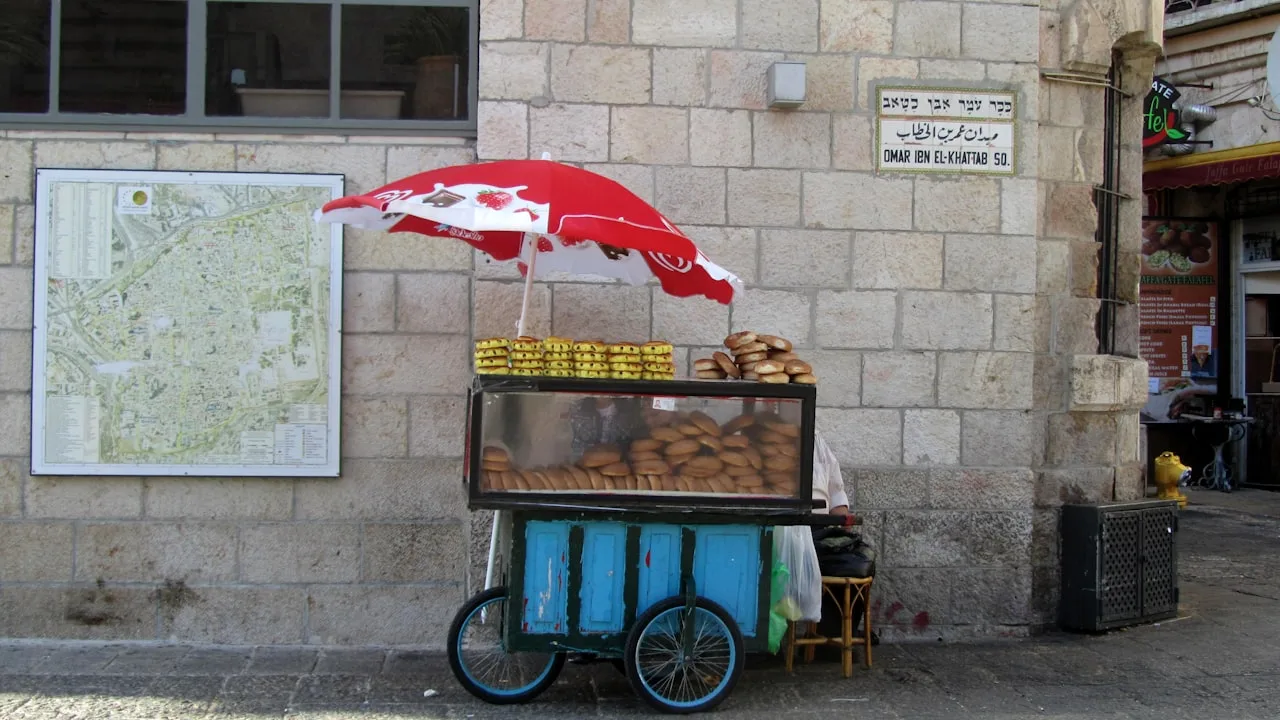
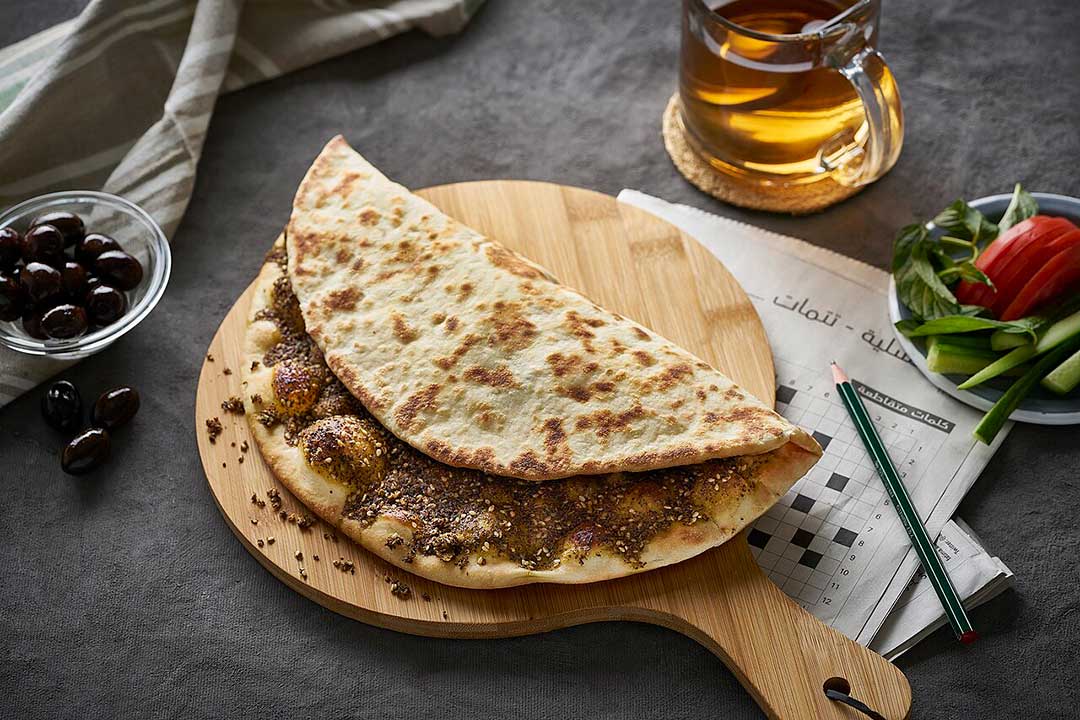
It is not flashy. It does not come with a side of branded storytelling or a heritage narrative carefully assembled for export markets. It is simply what people eat in the morning across Lebanon, Syria, Palestine, and Jordan, bought warm from a street-side furran (bakery), folded in half around its toppings, and consumed while walking. Functional, affordable, deeply satisfying. There is a lesson in that simplicity, if you are paying attention.
At its most fundamental level, man’oushe is a round, slightly leavened flatbread, baked directly on the stone floor of a wood or gas-fired oven. The dough is similar to pizza dough in texture but tends to be a little softer and thinner, pressed out by hand rather than rolled. What distinguishes it is not the bread itself but the manqoush process: the topping is applied before baking, pressed gently into the surface, so that heat and fat and bread become a single thing rather than three separate components sitting on top of one another.
The most traditional topping is za’atar, a dried herb blend built around wild thyme, sumac, and sesame seeds, mixed to a paste with olive oil. The ratio matters. A good za’atar mix should taste herbal and slightly tart, with the sesame providing nuttiness and the olive oil carrying everything into the dough. A poor one tastes dusty and flat. The difference between the two tells you quite a lot about where you are eating and how seriously the kitchen takes its ingredients.
Beyond za’atar, common toppings include akkawi cheese (a soft, salty white cheese that blisters pleasantly under heat), minced lamb with onion and spice, and a combination of cheese and za’atar that manages to be greater than the sum of its parts. More recently, urban bakeries have experimented with spinach fillings, egg and cheese combinations, and sweeter variants. Some of these work. Some do not. The classic remains the benchmark.
What strikes a visitor first is not the food itself but the social ritual around it. The furran is not merely a place to buy bread. It is a gathering point, a daily checkpoint, a place where neighbourhood life organises itself for a few hours each morning. Grandmothers carry trays of homemade dough to be baked for a small fee. School children collect their order before the bell. Shopkeepers grab a wrapped piece on their way to open up. The whole thing operates with an efficiency that would embarrass most urban coffee chains.
There is something worth understanding here about how food infrastructure shapes community. The bakery is distributed, local, and hyperspecific to its neighbourhood. It does not scale in the way a franchise scales. You cannot replicate the particular furran on your corner by opening fifty identical branches. The value is embedded in place, in the baker’s judgment, in the quality of the za’atar they source. That resistance to easy commodification is part of why it has survived unchanged for so long.
Contrast this with the trajectory of most Western breakfast foods, which have moved steadily toward convenience packaging, long shelf lives, and uniform flavour profiles designed to offend no one. Man’oushe offends no one either, but not because it has been smoothed and standardised. It offends no one because it is genuinely good. There is a meaningful distinction there.
Za’atar deserves its own paragraph, because it is frequently misunderstood outside the region. The word refers both to the wild thyme plant itself and to the blended spice mixture made from it. The confusion matters because the quality of a za’atar blend varies enormously depending on which version of the herb is used, where it was grown, and how it was dried. Lebanese za’atar tends toward the sharper and more aromatic. Syrian blends are sometimes heavier on sesame. Palestinian za’atar, particularly from the northern West Bank hill country, is considered by many to be the finest, with a complexity that mass-produced supermarket versions simply cannot match.
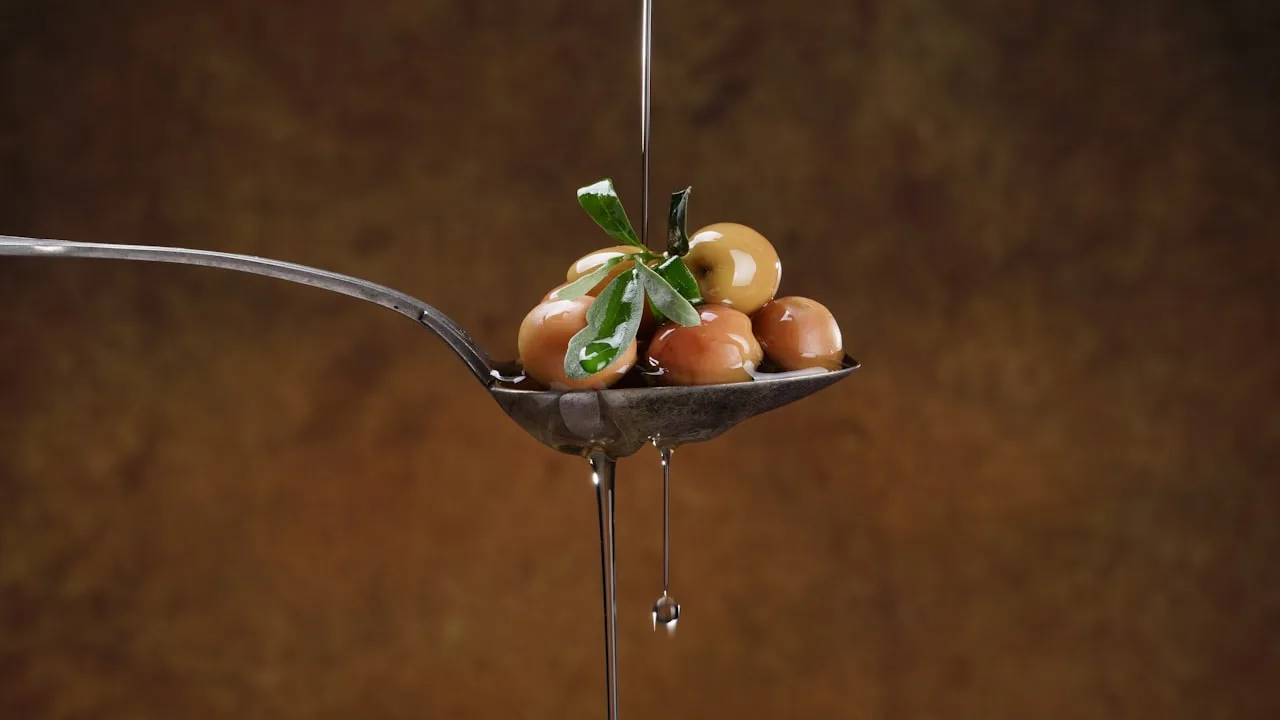
The olive oil used to bind the mixture is equally important. A grassy, peppery oil from the Lebanese or Palestinian highlands makes a noticeably different paste to a bland, refined substitute. When you eat a man’oushe made with proper za’atar and decent olive oil, the flavour is bright and layered. When you eat one made with inferior versions of both, you understand immediately why the food has a reputation problem in export markets. The problem is not the concept. The problem is the ingredient sourcing.
Lebanese diaspora communities have carried man’oushe to Dearborn, Sydney, São Paulo, London, and dozens of cities in between. In West London and parts of South London, you can find bakeries serving a reasonable approximation, particularly in areas with established Lebanese or Palestinian communities. The quality is inconsistent, as it always is when a food migrates far from its context, but the best versions are genuinely good and draw a broad customer base beyond the diaspora itself.
What these overseas bakeries do well, at their best, is preserve the core logic of the original: fresh dough, short wait, eaten warm. Where they tend to struggle is in sourcing za’atar of sufficient quality and in resisting the temptation to add too many fusion-influenced variations that muddy the offering. Man’oushe does not need to become a sourdough vehicle or a brunch centrepiece. It needs to be itself, executed correctly, priced accessibly.
The appetite for it is clearly there. As Western consumers have grown more curious about Middle Eastern food beyond hummus and shawarma, flatbreads like man’oushe occupy an interesting position: simple enough to be approachable, distinctive enough to feel genuinely different. The market for accessible, high-quality regional breakfast foods is not yet saturated, and man’oushe sits within it comfortably.
It is entirely possible to make a good version at home, though it requires accepting a few constraints. The dough is straightforward: flour, water, yeast, olive oil, salt, with a short rest and no particular fuss. The real challenge is replicating the high, even heat of a stone oven. A pizza stone or a heavy cast-iron pan brought to temperature in the oven helps significantly. The bread should blister slightly on the underside and remain soft above. Anything that comes out dry and crisp has been in too long or the oven was too cool.
For the za’atar mix, buy the best quality you can find, ideally from a specialist Middle Eastern grocer rather than a supermarket spice aisle. Mix it fresh with olive oil to a spreadable paste just before use, and apply it generously. This is not a dish where restraint serves you well. The topping should cover the bread almost to the edge, and the olive oil should be visible, glistening, before the bread goes into the oven.
Eat it immediately, folded in half. That detail is not optional. A man’oushe left to cool on a plate loses something essential. The warmth, the slight give of the bread, the way the za’atar paste becomes more aromatic as it cools just enough to hold without burning, all of that is part of the experience. Cold man’oushe is technically the same food. It is not, in practice, the same experience.
Man’oushe is a small, unglamorous thing that does its job with remarkable consistency across centuries and geographies. That is a more interesting achievement than it might initially appear. The question worth sitting with is why so many breakfast foods in the Western world have drifted away from that standard of simple, place-specific excellence, and what it would take to move back toward it.

At Med.kitchen, our passion lies in crafting exceptional culinary experiences through our online platform. We specialise in sharing a wealth of knowledge via articles, recipes, courses, and online mentoring, aiming to inspire both novice and seasoned chefs alike. Our focus has shifted from private dining to being an online source of gastronomic inspiration, allowing you to explore and refine your culinary skills from the comfort of your home..