
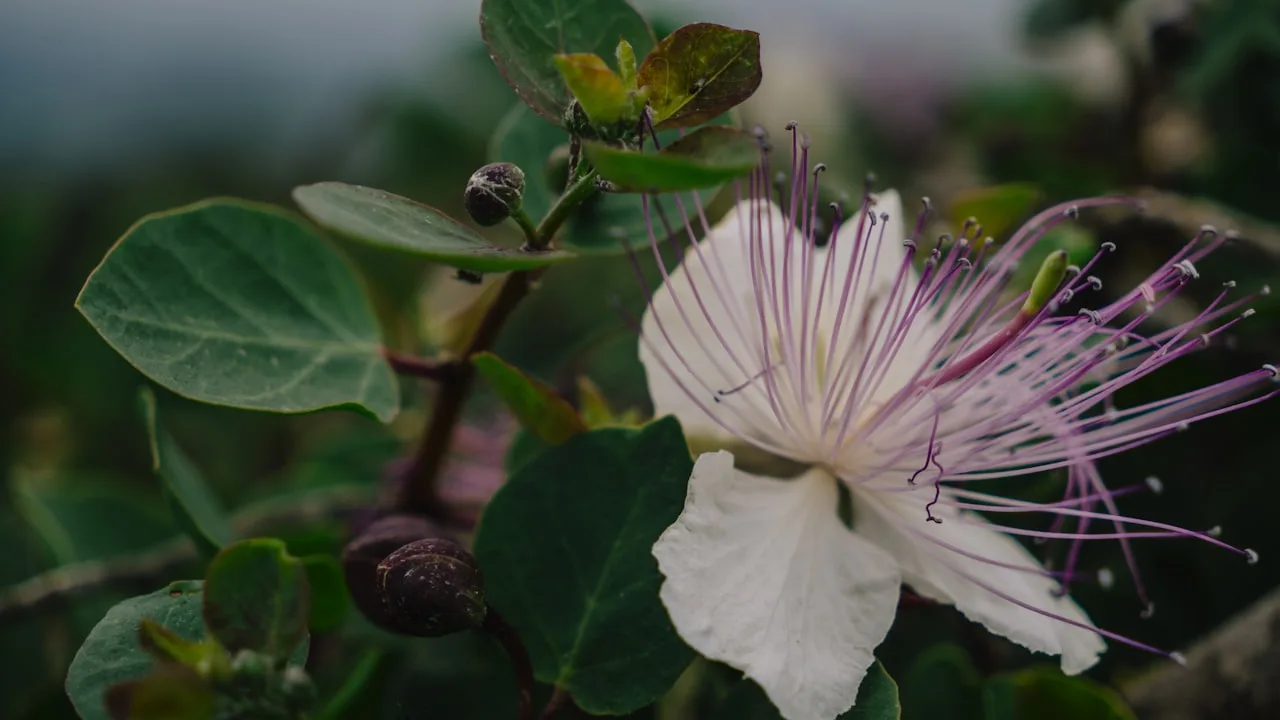
There is a small, determined plant growing out of a crack in a limestone wall in Valletta. It asks nothing of anyone. It needs no soil to speak of, no irrigation, no particular encouragement. It simply exists, sending out long trailing stems and producing tight green buds that, if left alone, will open into flowers of almost theatrical beauty. Most people walk past it without a second thought. And yet, that modest little plant, the caper, has been feeding Mediterranean civilisations for thousands of years and continues to appear on dinner tables from Palermo to Beirut, from Barcelona to Athens. That gap between obscurity and ubiquity is worth examining closely.
The caper plant, Capparis spinosa, is a perennial shrub native to the Mediterranean and parts of Central Asia. It is not cultivated in the way that most commercial crops are. It colonises. Rocky slopes, ancient walls, cliff faces, the crumbling mortar of fortifications built centuries ago. Malta is one of the finest examples of this habit, where capers grow wild across the bastions and field boundaries of the island with the casual confidence of something that belongs there entirely because it does.
The part most people know is the bud, harvested before it opens. But there is also the caper berry, which is the fruit that develops after the flower blooms. Both are edible, both are preserved, and both carry that distinctive sharp, briny, slightly floral flavour that makes a good puttanesca sauce or a smoked salmon garnish feel finished rather than merely assembled. The difference between a bud and a berry matters more than most cookbooks suggest, but that is a conversation for another time.
Capers appear in records stretching back to at least 2000 BCE. They feature in ancient Sumerian texts, turn up in the remains of Bronze Age settlements, and were traded across the early Mediterranean long before the Roman Empire formalised its vast food supply networks. The Greeks used them medicinally as well as culinarily. The Romans pickled them in vinegar and brine and incorporated them into sauces with a frequency that suggests capers were considered a staple condiment rather than a luxury ingredient.
This is an important point. There is a tendency to romanticise historical ingredients as either peasant food or aristocratic delicacy, with nothing in between. Capers occupied a more interesting middle ground. They were accessible because they grew wild and required no farmland, but they also appeared in elaborate Roman recipes that clearly reflect wealth and sophistication. Availability and prestige are not always opposites, and the caper has always understood this ambiguity better than the people writing about it.
Here is where the practical complexity begins. Raw capers are essentially unpleasant. They are bitter and astringent and carry glucosinolates that give them a sharp, almost medicinal edge. Nobody discovered them and immediately thought: yes, this belongs on my fish. What transformed the caper from an inedible weed bud to a beloved condiment was preservation, specifically salt-curing and pickling in brine or vinegar.
Salt-curing draws out moisture and bitterness over time, mellowing the flavour while concentrating something deeper and more complex underneath. The best Maltese capers, those from Gozo in particular, are still cured in dry sea salt using methods that have not changed substantially in centuries. They arrive at the table firm, intensely flavoured, and carrying a faint mineral quality that the vinegar-pickled versions from supermarket shelves rarely replicate. Rinsing them briefly before use is standard practice. Soaking them too long is a mistake that ruins precisely what makes them worth using.
Vinegar pickling, the more common commercial approach, preserves the bud efficiently and gives it a sharper, more acidic profile. This suits certain dishes well. But it is worth understanding that the vinegar version and the salt-cured version are not interchangeable. Using one where a recipe expects the other produces a noticeably different result. This is one of those small distinctions that separates cooking that tastes considered from cooking that merely follows instructions.
Malta’s relationship with the caper plant is peculiarly intimate. The islands sit at the centre of the Mediterranean, geologically ancient and botanically specific. The wild caper here, growing from the limestone that underlies virtually everything, has access to minerals and conditions that shape its flavour profile in ways that are genuinely distinct from cultivated varieties grown elsewhere. This is not nostalgia or marketing. Terroir is real, even for a weed growing out of a wall.
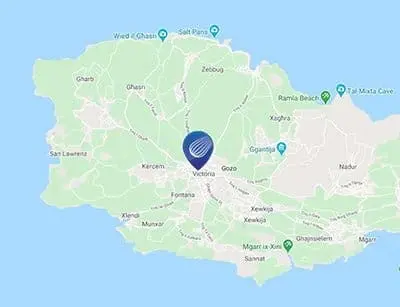
Gozitan capers have been sold at the Valletta market for generations, usually in simple plastic bags alongside fresh vegetables and dried herbs, without ceremony or particular branding. In recent years, some producers have begun positioning them more deliberately for export, packaging them properly and getting them into delicatessens in London, Rome and beyond. This is a sensible development, though there is always a risk that professionalising an artisan product slowly removes the qualities that made it worth professionalising in the first place. That tension is familiar and worth watching carefully.
Today, caper production is spread across the Mediterranean, with notable concentration in a few specific locations. The Aeolian Islands off Sicily, particularly Pantelleria, are famous for their production. Morocco produces significant quantities. Spain, Turkey, and Cyprus all contribute to the commercial supply chain. The global caper market is not enormous in absolute terms, but it is remarkably consistent and has remained so for decades. Demand does not spike dramatically; it simply persists, which is a different kind of commercial reliability and arguably a more durable one.
What is interesting is how little the trade structure has changed relative to other Mediterranean food products. Olive oil has undergone substantial industrialisation. Wine has become a globally sophisticated industry with complex provenance systems, certifications and international investment. Capers remain, by comparison, a relatively quiet commodity. Production is still largely small-scale and regional. The knowledge of when to harvest, how to cure, and what quality looks like remains embedded in particular communities rather than distributed across global supply chains.
The caper’s story is, in part, a story about what survives when it is useful enough and simple enough and deeply enough embedded in a food culture to resist replacement. It has not been engineered, optimised or consolidated into a handful of dominant brands. It remains plural, regional, and dependent on human knowledge and seasonal rhythms in ways that most modern food production deliberately avoids.
There is something instructive here for anyone thinking about food provenance, traditional knowledge systems, or the economics of artisan production. Not every valuable thing needs to scale. Not every regional product should become a globalised commodity with standardised specifications and consolidated logistics. The caper has been doing exactly what it does for several thousand years and has arrived at the present moment still recognisable, still useful, still growing from Maltese walls without asking for anything in return.
Whether that can continue as export demand increases, as climate pressures alter the growing conditions across the Mediterranean, and as younger generations in production communities pursue different livelihoods is the genuinely open question. The plant itself will almost certainly survive. Whether the knowledge, the methods, and the unhurried patience required to do the preservation properly will survive alongside it is less certain and probably worth more attention than it currently receives.

At Med.kitchen, our passion lies in crafting exceptional culinary experiences through our online platform. We specialise in sharing a wealth of knowledge via articles, recipes, courses, and online mentoring, aiming to inspire both novice and seasoned chefs alike. Our focus has shifted from private dining to being an online source of gastronomic inspiration, allowing you to explore and refine your culinary skills from the comfort of your home..