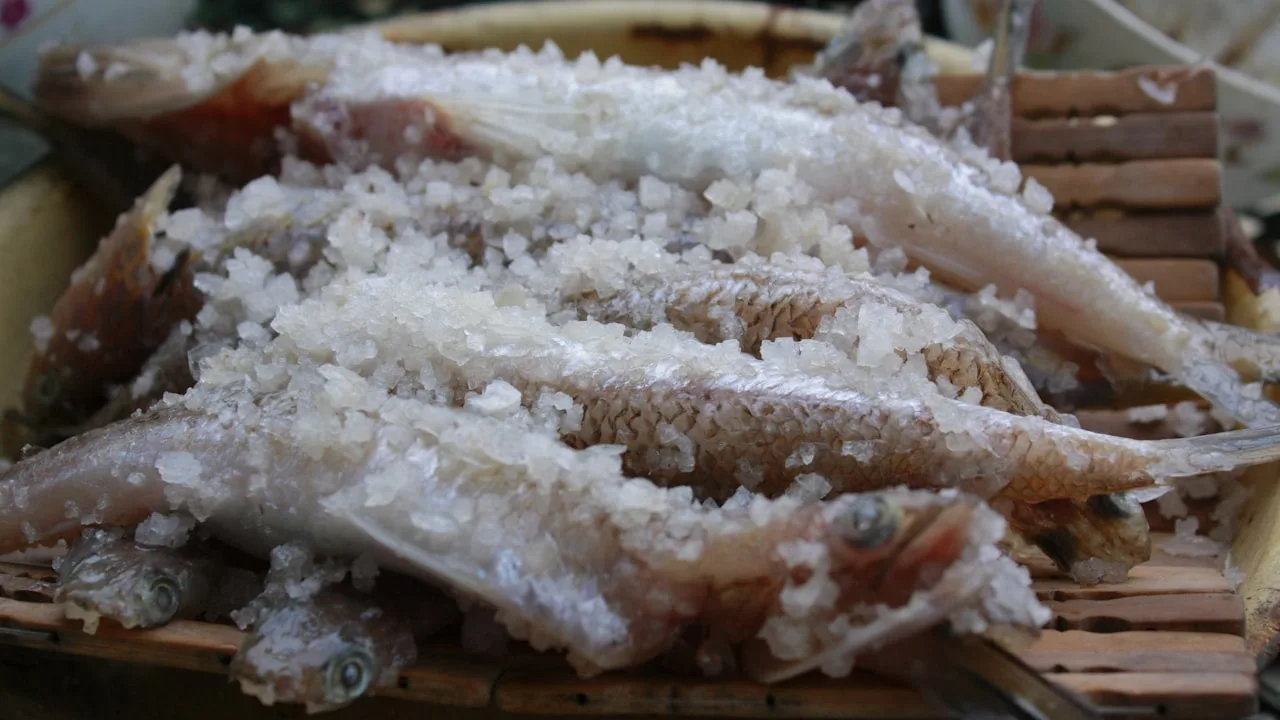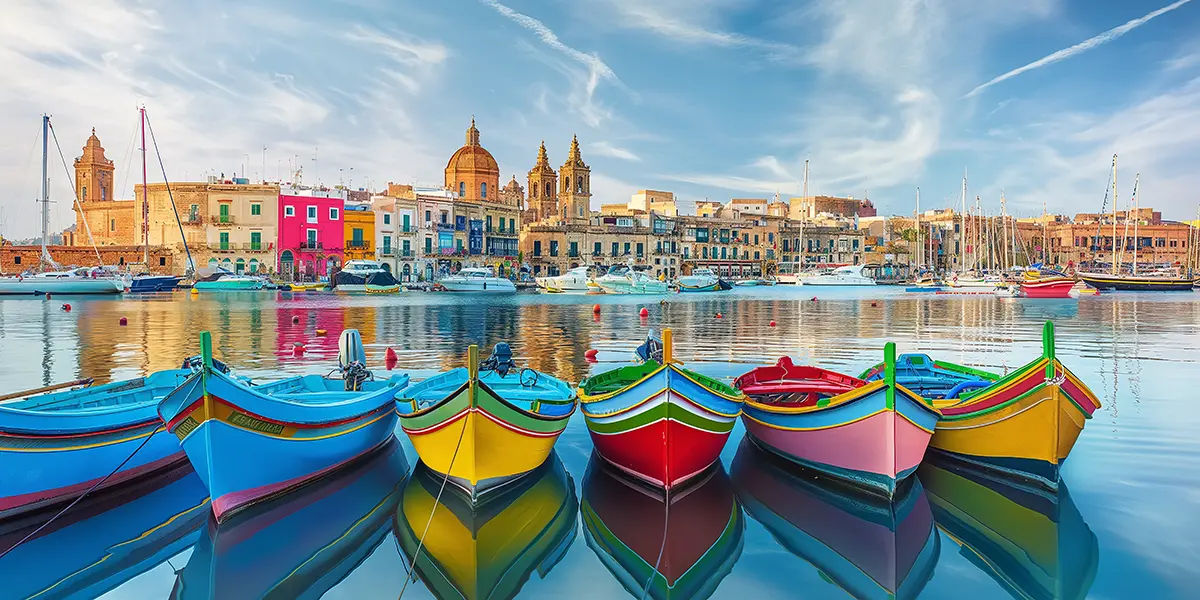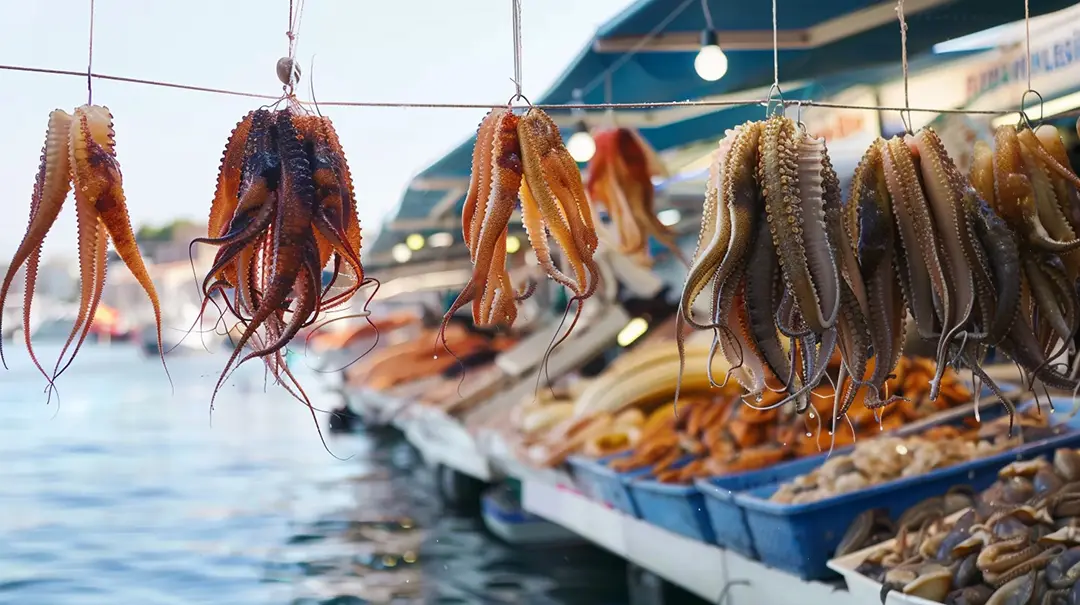

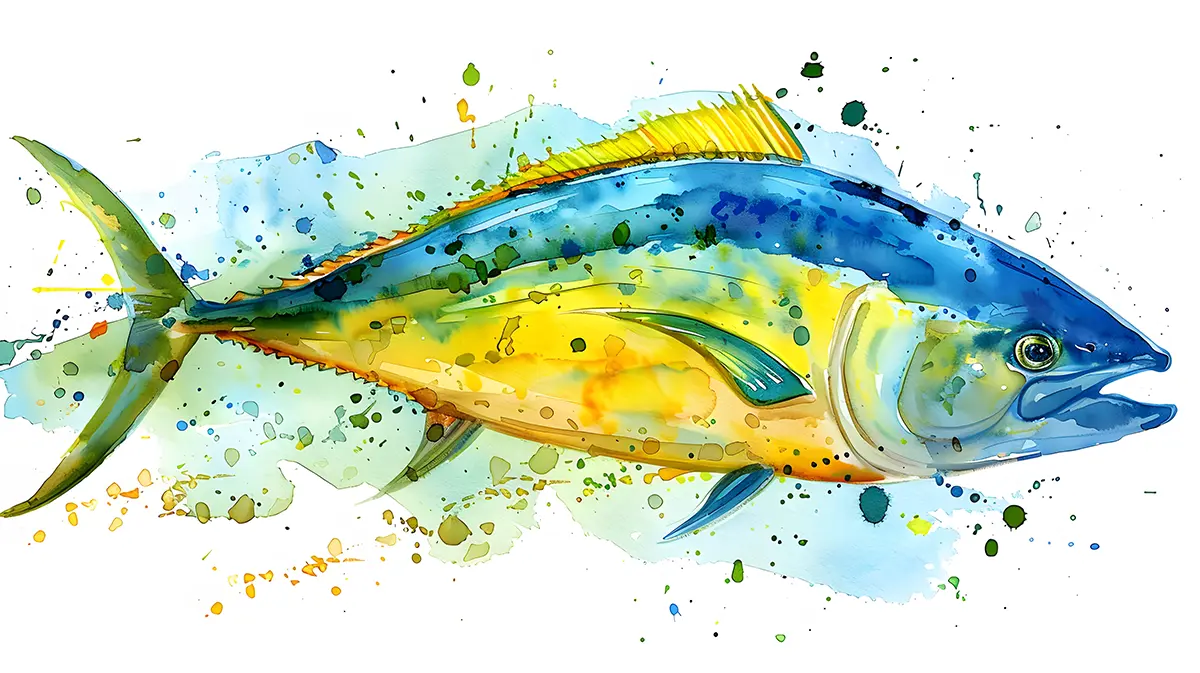
Every autumn in Malta, something shifts. The sea changes colour slightly, the air carries a different weight, and the fishing boats come back loaded with lampuki. Dorado, mahi-mahi, dolphinfish, call it what you like depending on where you grew up. Here, it is lampuki, and for a few months each year it dominates menus, dinner tables, and market stalls with the kind of seasonal authority that imported ingredients simply cannot replicate.
What is less often discussed is why lampuki also happens to be one of the safest fish you can eat from a mercury standpoint. That is not a minor footnote. Mercury in seafood is a legitimate concern, not a fringe anxiety, and understanding which fish carry risk and which do not requires looking at the biology rather than just the headlines.
The popular mental model goes something like this: fish live in the sea, the sea has mercury, therefore fish have mercury. That is technically true but almost useless as a framework for making decisions. Mercury accumulation in marine life is far more specific than that, and the key variable is not the ocean itself but the food chain.
The process is called biomagnification. Mercury, primarily in its organic form methylmercury, does not pass efficiently back out of living tissue. It accumulates. So when a small fish eats plankton containing trace mercury, it retains most of that mercury. When a larger fish eats dozens of those small fish, it retains their mercury too. By the time you reach apex predators, animals that have spent years or decades eating other mercury-laden fish, the concentrations can be remarkably high. This is why swordfish, shark, and certain species of Tuna carry consistent warnings for pregnant women and young children.
The critical factors, then, are lifespan, position in the food chain, and how much biomagnification has had time to occur. Short-lived fish that eat low on the food chain accumulate very little. Long-lived apex predators accumulate a great deal. This is not complicated once you see it clearly.
Lampuki, known scientifically as Coryphaena hippurus, are fast-growing, short-lived, and remarkably energetic fish. They typically live no longer than four or five years, and the ones caught in Maltese waters during the seasonal fishery are usually under three. That brevity matters enormously when you are thinking about mercury accumulation time.
Their diet is also telling. Lampuki feed primarily on smaller fish, squid, and crustaceans found near the surface. They are not sitting at the very bottom of the food chain, but they are nowhere near the top either. They do not live long enough, and they do not feed on large enough prey, to accumulate mercury at concerning levels. Studies measuring methylmercury concentrations in mahi-mahi consistently place them well below the thresholds that regulatory bodies in the EU and elsewhere flag as problematic.
Compare that profile to a bluefin tuna, which can live for forty years, migrate enormous distances, and spend decades eating other large fish. The difference in mercury burden between a lampuki and a large bluefin is not marginal. It is a reflection of decades of biological accumulation versus a lifespan measured in a couple of years.
There is something quietly interesting about how the traditional Maltese lampuki fishery operates. The season runs roughly from August through to November, following the fish’s migratory patterns as they move through Mediterranean waters near floating debris and weed mats. Fishing is timed to biology, not to industrial demand.
This kind of seasonality, which might look like simple cultural tradition, actually functions as a form of sustainability by default. Lampuki are not being farmed or pressure-caught year-round. The population has time to recover, the fishing effort is concentrated and relatively small-scale, and the fish being caught are genuinely fresh rather than transported across hemispheres. Whether or not this was ever the conscious intention, the outcome is a fishery that remains viable year after year without the industrial stress that collapses other stocks.
It is a reminder that sometimes practices embedded in local culture carry ecological logic that we only appreciate once we understand the science behind them.
Lampuki are not just low in mercury. They are genuinely nutritious. The flesh is lean but not dry, with a mild flavour that holds up well to the assertive ingredients typical of Maltese cooking: capers, olives, tomatoes, fresh herbs. The fish is a solid source of protein, B vitamins, and omega-3 fatty acids, the latter being precisely the kind of nutrient that draws health-conscious eaters toward seafood in the first place.
The irony in some food anxiety conversations is that people avoid fish because of mercury concerns, and in doing so they miss out on nutrients that are genuinely hard to source elsewhere. The nuanced position, supported by the biology, is that some fish carry real mercury risk and should be consumed sparingly. Others, including lampuki, carry negligible risk and offer considerable nutritional benefit. Treating all fish the same because some fish are problematic is the kind of blunt reasoning that does people more harm than good.
The lampuki example is instructive beyond the fish itself. It demonstrates a broader principle: that risk is rarely uniform across a category, and that understanding mechanism matters far more than memorising conclusions. Knowing that swordfish is high in mercury does not tell you anything useful about lampuki unless you understand why swordfish accumulates mercury, which then lets you reason accurately about any fish you encounter.
The same logic applies in dozens of other food and health contexts. Blanket rules feel reassuring because they are simple to follow. But they frequently misdirect people, steering them away from genuinely safe or beneficial options while failing to distinguish real from theoretical risk. The better approach is always to ask: what is the mechanism here, and does this specific case actually trigger it?
For lampuki, the answer is clearly no. Short life, moderate position in the food chain, limited time for biomagnification to operate. The fish is as close to a clean bill of health as seafood gets.
There is a particular pleasure in discovering that something people already love turns out to be well-founded on the evidence. Lampuki did not need the science to justify its place in Maltese culture. It earned that through flavour, availability, and the kind of communal identity that only a seasonal food can build. But knowing the biology adds a different kind of satisfaction: the sense that the celebration is not just cultural habit but something that stands up to scrutiny.
If there is a forward-looking thought here, it is this: as conversations around sustainable and healthy eating become more sophisticated, seasonal, locally-caught, short-lived fish like lampuki represent a model worth paying attention to. Low environmental impact, low contaminant burden, high nutritional value, and embedded in a cultural tradition that has kept the fishery viable for generations. That combination is rarer than it looks, and considerably more valuable than most people currently recognise.

At Med.kitchen, our passion lies in crafting exceptional culinary experiences through our online platform. We specialise in sharing a wealth of knowledge via articles, recipes, courses, and online mentoring, aiming to inspire both novice and seasoned chefs alike. Our focus has shifted from private dining to being an online source of gastronomic inspiration, allowing you to explore and refine your culinary skills from the comfort of your home..