
There is a version of Mediterranean cooking that exists almost entirely in the Western imagination. It smells of roasted garlic, it gleams with olive oil, and it carries the confident assumption that every dish from Lisbon to Beirut is built on the same aromatic foundation. It is, to be generous, a simplification. To be more precise, it is wrong in ways that actually matter if you care about cooking well.
Garlic is genuinely important in many Mediterranean traditions. Nobody is disputing that. But the idea that it is universal, that it is the defining note of the entire region’s cuisine, flattens an extraordinary amount of culinary diversity into something convenient and largely fictional. The Mediterranean basin spans three continents, dozens of distinct cultures, and thousands of years of agricultural history. The notion that they all reached for the same bulb is worth examining seriously.
A fair bit of this can be traced to mid-twentieth century food writing, particularly from American and British authors who encountered Mediterranean cooking through specific entry points. Southern French cooking, southern Italian cooking, and certain corners of Greek cuisine were early favourites. These traditions do use garlic with genuine enthusiasm. The problem is that they were taken as representative of something much larger than they actually are.
Elizabeth David, who did more than almost anyone to introduce Mediterranean flavours to British kitchens, wrote extensively about Provençal and Italian food. Her influence was profound and largely positive. But the picture she painted, however vivid and accurate for its specific contexts, was inevitably partial. When readers absorbed “garlic is essential to Mediterranean cooking,” they were absorbing a regional observation dressed up as a continental truth.
Restaurant culture compounded this. Dishes that travelled well, that could be made in bulk and recognised quickly by customers, tended to lean on bold, familiar flavours. Garlic is bold and familiar. It became a shorthand for authenticity, which is precisely the wrong thing for a shorthand to do.
Turkish cuisine is one of the great cooking traditions of the world, and it is genuinely Mediterranean in its geography, its ingredients, and its history. It is also, in large parts, quite restrained with garlic. Many of the most celebrated dishes use it sparingly or not at all. The flavour profiles lean instead on lamb fat, slow-cooked onion, dried fruits, warm spices like cinnamon and allspice, and the careful balance of sour and rich.
Dishes like hünkâr beğendi, İmam bayıldı, or a well-made pilav are not garlic-forward constructions. The smokiness of a properly charred aubergine, the sweetness of slow-cooked tomato, the richness of clarified butter: these are the notes that matter. Garlic might appear in the background of a marinade or a yoghurt sauce, but it is not doing the structural work. The architecture of the dish is built from other things entirely.
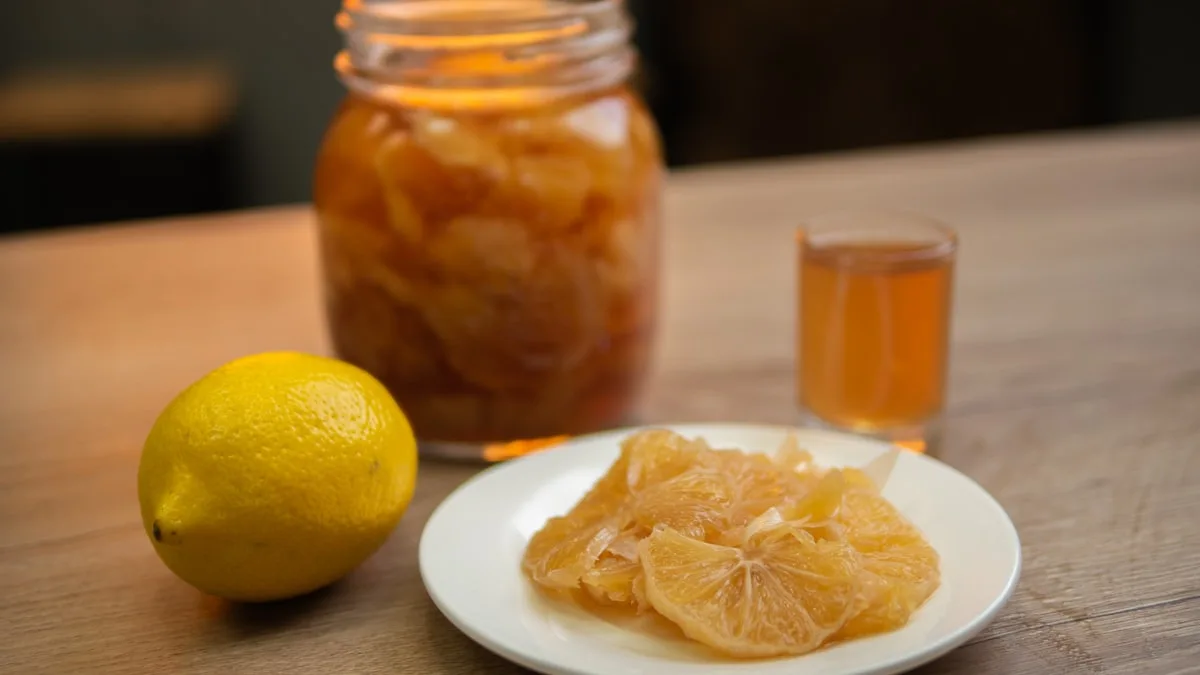
Moroccan cooking sits at the southern edge of the Mediterranean world, shaped by Berber, Arab, Andalusian, and sub-Saharan influences. It is complex, historically layered, and deeply sophisticated. Garlic does appear in Moroccan kitchens, sometimes meaningfully so. But the real work is done elsewhere: by ras el hanout, by preserved lemon, by the interplay of cumin and coriander, by the counterpoint of sweet and savoury that defines a good tagine.
A classic chicken and preserved lemon tagine, made properly, is not a garlic dish. The brine of the preserved lemon, the saffron, the green olives, the slow steam inside the conical lid, these are the flavours that matter. Garlic can be present without being dominant. In Moroccan cooking, more often than not, it simply plays a supporting role that most diners would struggle to identify if asked.
Lebanese, Syrian, and Palestinian cooking is sometimes cited as evidence of garlic’s Mediterranean dominance, and toum, the intensely garlicky white sauce, is certainly part of the picture. But it is one part. The broader tradition includes dishes built on pomegranate molasses, sumac, dried limes, tahini, and the careful seasoning of fresh herbs. Fattoush is not a garlic dish. A properly made kibbeh leans on warm spice and the quality of the lamb, not on alliums.
Even in Lebanese cooking, where garlic is genuinely celebrated in certain preparations, there is no expectation that it appears in everything. The cuisine is far too refined for that kind of monotony. A good mezze spread demonstrates the point clearly: you might have one or two dishes where garlic is the lead note, surrounded by many others where it is absent entirely.
Even within Provence, the tradition most responsible for the garlic-equals-Mediterranean equation, the picture is more complicated than it appears. Bouillabaisse, one of Provence’s defining dishes, is about the sea, the saffron, the careful sequence in which different fish are added. Garlic plays a role, but the dish is not reducible to it. Ratatouille, done properly and slowly, is about the sweetness of slow-cooked vegetables, not about garlic intensity.
The association has also shifted over time. Mid-century French regional cooking has been interpreted, adapted, and amplified through so many restaurant kitchens that the original proportions have drifted. What reads as “authentically Provençal” to a diner in London or New York is often a heavier, more garlic-forward version of something that was originally more balanced.
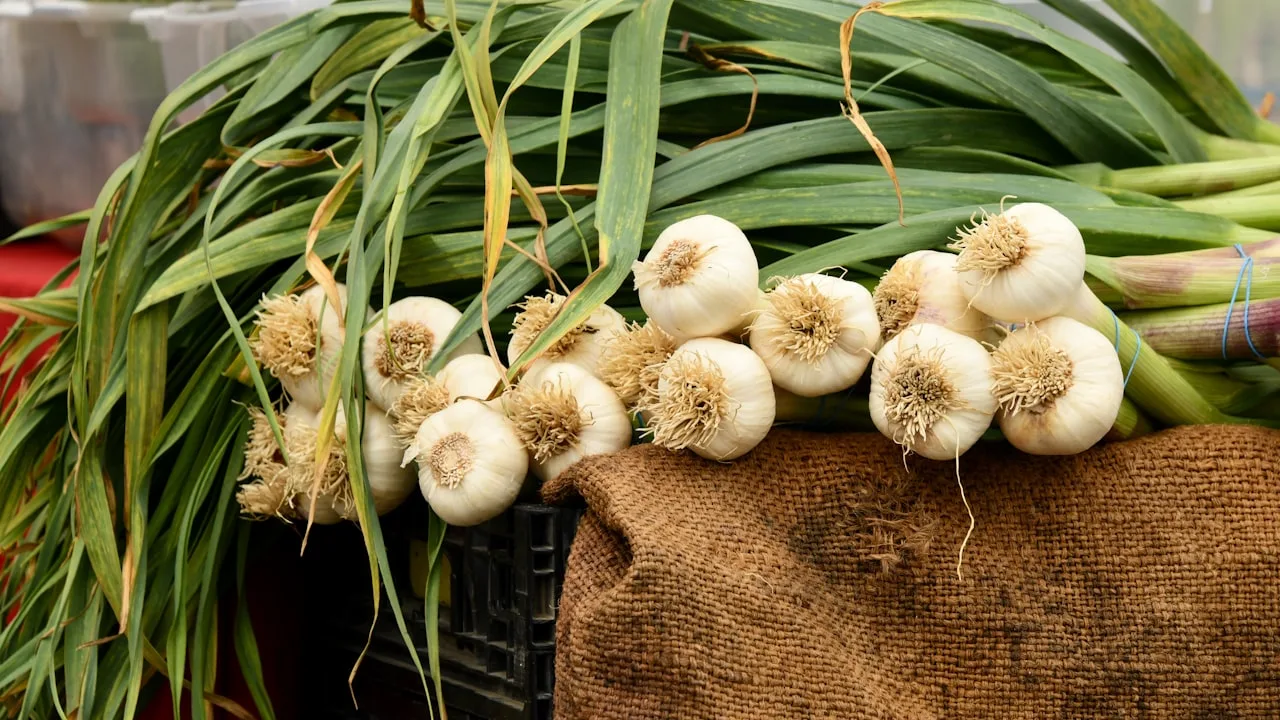
This is not an argument for using less garlic in general. Garlic is wonderful. A slow-roasted head of it, squeezed onto bread, is one of the more quietly satisfying things you can eat. The point is about defaults and assumptions, specifically the assumption that garlic is always the right call when cooking in a “Mediterranean style.”
If you approach a Turkish or Moroccan or Eastern Mediterranean recipe with the assumption that more garlic equals more authenticity, you will consistently produce food that tastes like a generalised idea of the cuisine rather than the cuisine itself. You will be making a dish from a mythology rather than from a tradition. The flavours you are reaching for will keep sliding away from you.
Better to ask what each dish is actually built around. What is the structural flavour? What is the dish trying to do? Sometimes the answer involves garlic. Often, especially in the traditions we have discussed, it involves something else entirely: a spice blend, an acid, a fat, a slow transformation of a single vegetable into something richer than it started out as.
The garlic myth is a specific instance of a more general habit: collapsing a diverse culinary region into a single defining ingredient or technique. The same thing happens with chilli and “Asian food,” with butter and “French food,” with olive oil and, well, Mediterranean food again. These shortcuts feel useful until you try to cook something and find that the shortcut has led you somewhere slightly wrong.
The Mediterranean is not a flavour. It is a geography that contains multitudes: different climates, different agricultural histories, different religious and cultural influences on what is eaten and how. The food of coastal sicily and the food of coastal Tunisia share certain ingredients and certain attitudes toward freshness and simplicity. They are not the same food, and they do not smell the same when they are cooking.
Paying attention to those differences, rather than smoothing them into a convenient sameness, is how you learn to cook more interesting food. The question worth sitting with is this: how many other ingredients or techniques have we quietly elevated into false universals, and what might we be missing as a result?

At Med.kitchen, our passion lies in crafting exceptional culinary experiences through our online platform. We specialise in sharing a wealth of knowledge via articles, recipes, courses, and online mentoring, aiming to inspire both novice and seasoned chefs alike. Our focus has shifted from private dining to being an online source of gastronomic inspiration, allowing you to explore and refine your culinary skills from the comfort of your home..