
TL;DR cyprus‘s division in 1974 did not create two separate cuisines. It set one shared cuisine drifting in two directions. The meze table looks almost identical north and south, but pork disappears in the north, seasoning grows simpler, and Anatolian influences strengthen over time. Şeftali kebab and sheftalia are the same dish prepared almost identically on both sides, yet each carries a different cultural weight. The pork absence in the north is less about religious observance than deeply embedded identity. British colonial habits left their own mark, most visibly in Scotch whisky outselling rakı in the north. Neither food culture is simply a regional version of Greece or Turkey. Both are distinctly, stubbornly Cypriot.
There is a particular cruelty in the way food memory works. It does not care about borders. It does not update itself when a community moves or is moved or finds itself on the wrong side of a line drawn in a hurry by people who have never eaten at its tables. The flavours stay. The dishes stay. And then, slowly, almost imperceptibly, they begin to drift.
cyprus has been living this experiment since 1974.
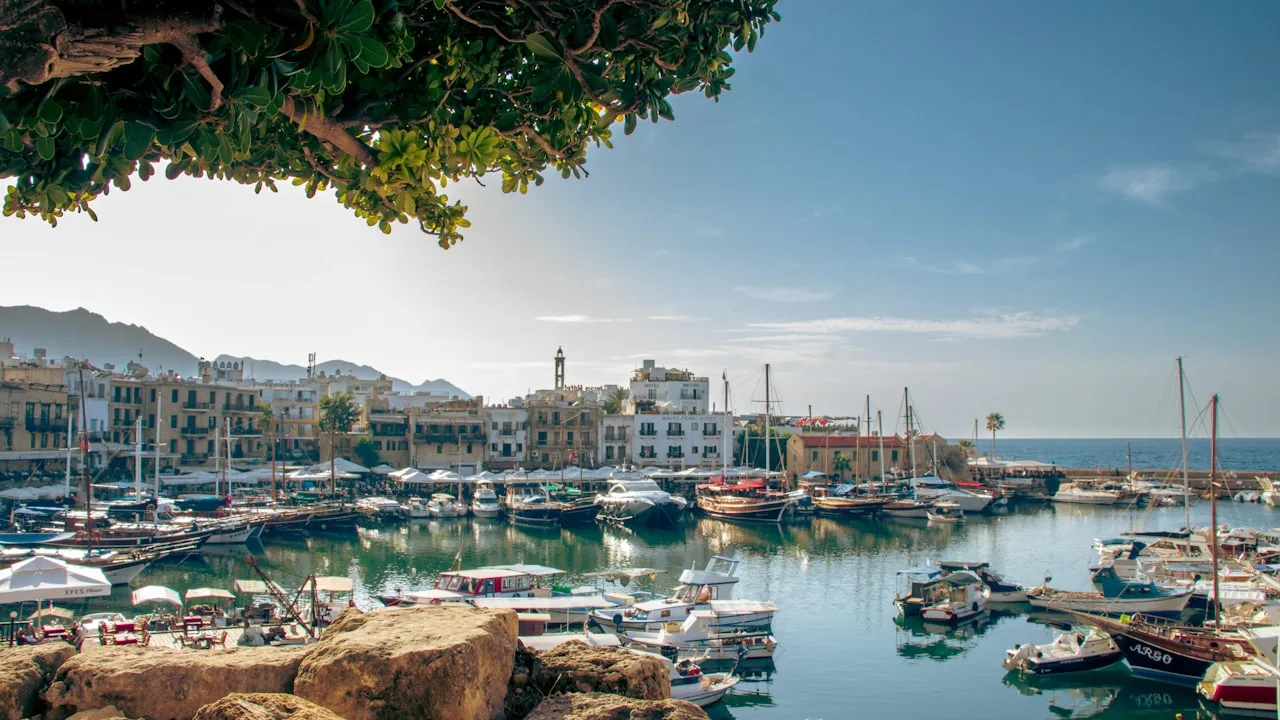
The island was divided after a Greek-backed coup and subsequent Turkish military intervention displaced more than thirty per cent of the population. Greek Cypriots in the north relocated south. Turkish Cypriots in the south relocated north. Families packed what they could carry. What they could not carry, they remembered. Recipes crossed the border in the heads of people who had no idea whether they would ever return, and then the border closed, and the remembering became the only version they had left.
What resulted, over the following decades, was not two entirely different cuisines. It was something stranger and more interesting than that: the same cuisine, diverging in slow motion.
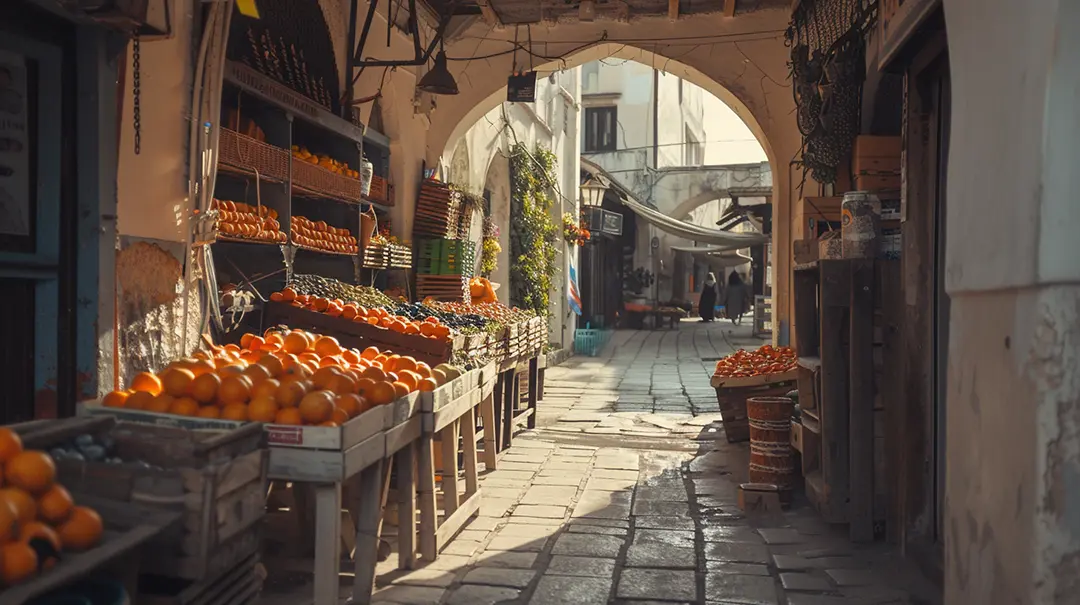
Sit down to meze in Nicosia on the northern side of the Green Line, and then sit down to meze in Nicosia on the southern side, and the tables will look, at first glance, almost identical. Olives. Bread. Yoghurt with herbs. Halloumi, that most Cypriot of cheeses, whose name traces back to Arabic and whose production predates the very idea of the island’s division. Hummus. Beetroot. Pickled vegetables. The same unhurried accumulation of small dishes, the same expectation that the meal will take as long as it takes, the same understanding that eating together is itself the point.
The meze culture is perhaps the clearest evidence that whatever political and cultural forces have tried to separate the two communities, they are working against deep culinary gravity. This is not Greek food and Turkish food sharing a table out of politeness. It is a single, ancient, Mediterranean way of eating that absorbed influences from Greece, Turkey, the Levant, and North Africa over centuries and then became something distinct from all of them.
And yet the closer you look, the more the differences reveal themselves. Not in the structure of the meal, but in its texture. The north tends towards simpler seasoning, letting ingredients speak with less intervention. The south is more liberal with herbs and spices, building layers of aromatic complexity into dishes that a Northern Cypriot cook might consider overworked. Neither approach is wrong. They are just different answers to the same question, developed in isolation, shaped by different influences pulling in different directions over fifty years.
No single dish illustrates the complexity of Cypriot food identity more precisely than the small, extraordinary thing known in the north as ‘şeftali kebabı’ and in the south as ‘sheftalia’.
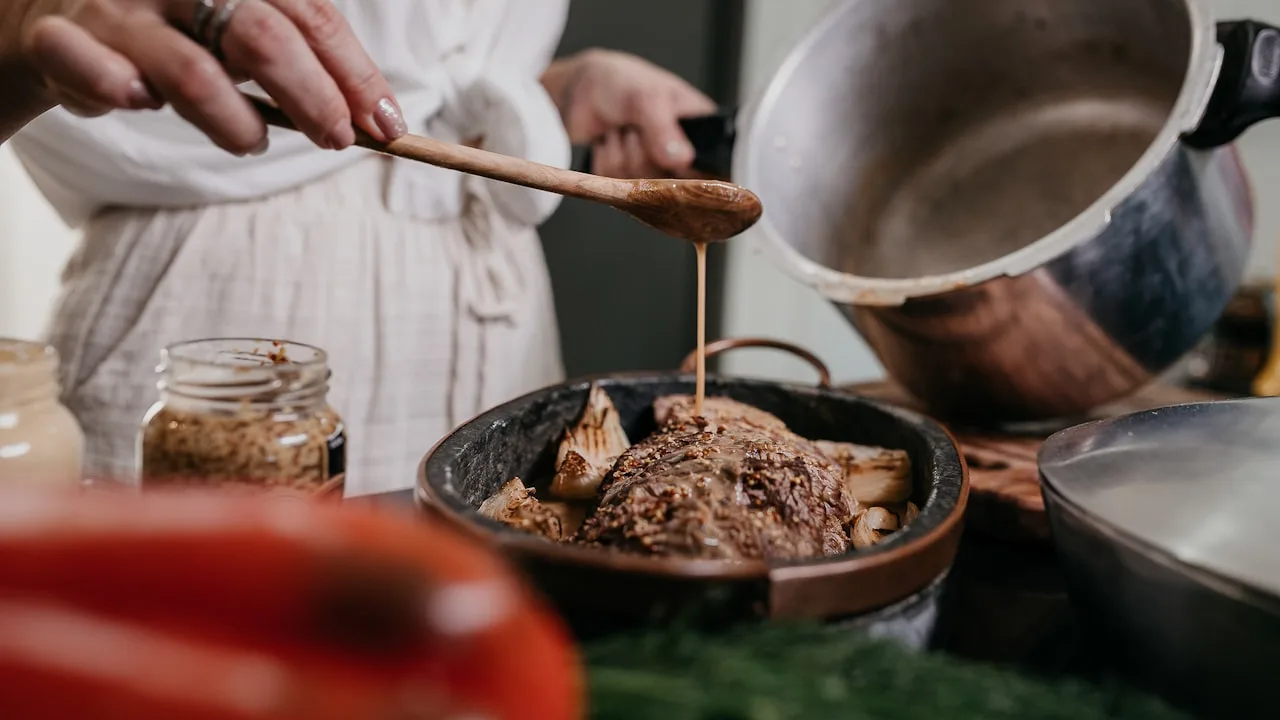
The preparation is almost identical on both sides. Minced meat, usually lamb, seasoned with onion, parsley, salt, and pepper, wrapped in caul fat and grilled over charcoal until the fat renders and chars at the edges. The name, which translates loosely as peach kebab, refers not to the fruit but to the pale, rounded appearance of the raw parcel before it meets the heat. It is the kind of dish that looks deceptively simple until you eat one and understand that the simplicity is the point.
In the north, şeftali kebabı is spoken of in terms that border on the devotional. It is frequently described as the national dish, a statement of identity that carries real weight given that the Turkish Republic of Northern cyprus is recognised only by Turkey and therefore has a particular need for cultural anchors. The dish does this work quietly, without ceremony. It is street food. It is meze. It is what you eat at a family gathering, at a beach restaurant, or at a roadside stall at ten in the evening.
In the south, sheftalia holds equivalent affection, with broadly equivalent preparation, and yet its cultural position is subtly different. In Greek Cypriot cuisine, pork is the dominant protein, and the meat landscape is richer and more varied. Sheftalia shares the table with souvla, with hiromeri, and with loukaniko. It is beloved, but it is not carrying the same weight of identity. It does not need to.
The same dish. Different pressure on it. Different soul.
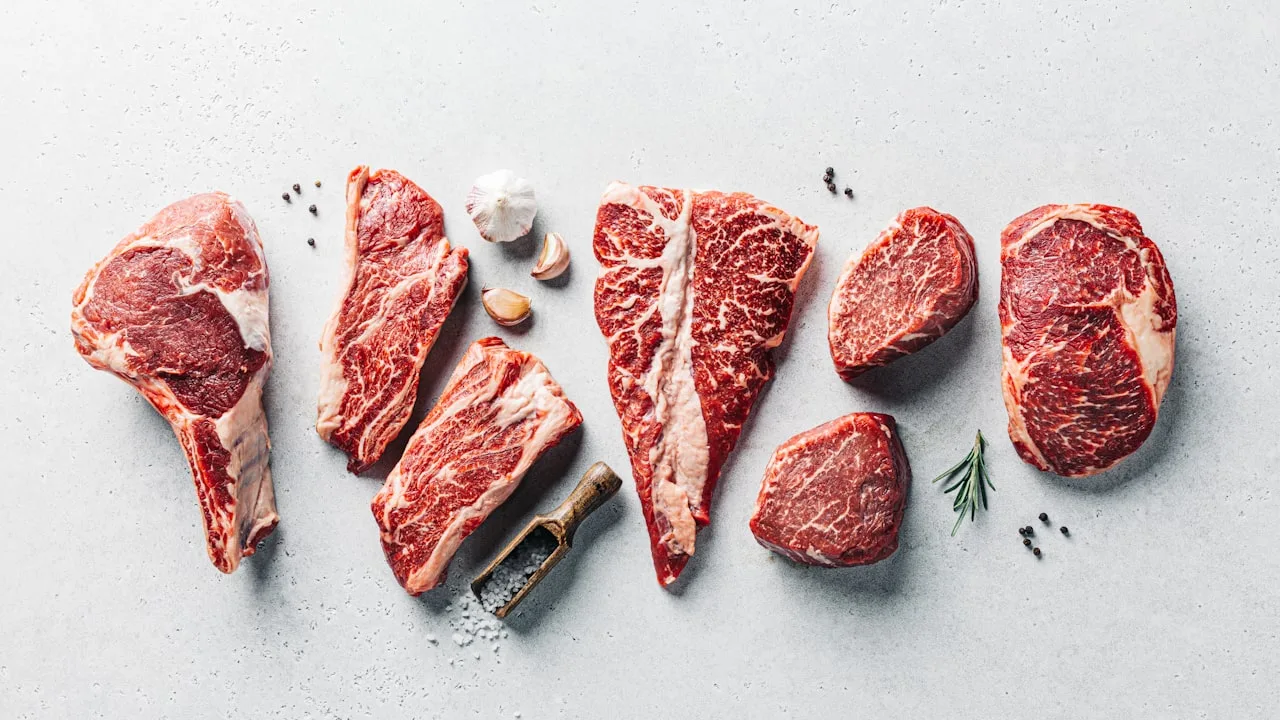
The absence of pork in Northern Cypriot cuisine is the most concrete and practical culinary difference between the two regions, and it is almost always explained in religious terms. The north is Turkish Cypriot, therefore predominantly Muslim, and therefore has no pork. This is tidy and not entirely wrong, but it misses something important.
Northern Cyprus is, by almost any observable measure, a deeply secular food culture. Alcohol is widely consumed and largely untaxed. The attitude towards Islamic dietary observance is relaxed in a way that would surprise visitors who arrive expecting otherwise. The pork absence is not, in any meaningful day-to-day sense, an act of religious practice. It is something more interesting: a cultural habit so deep it no longer needs justification. An identity marker that persists not because anyone is enforcing it but because it is simply part of what it means to cook and eat in the north.
This is how food identity actually works, across the Mediterranean and everywhere else. It is not legislation. It is not theology. It is repetition, and family, and the thing your grandmother made, and the assumption, so deeply embedded it barely registers as an assumption, that this is what food is.
Here is the detail that stops you short, if you let it.
In Northern Cyprus, Scotch whisky outsells Turkish rakı. Not by a small margin. Enough that anyone paying attention to what is behind the bar in a northern Cypriot restaurant or household will notice that the bottle most likely to be reached for is not the one that would seem most culturally obvious.
This is the legacy of British colonial rule, which ended formally with Cypriot independence in 1960 but left its traces in ways that have proven extraordinarily durable. The British brought their drinking habits to the island, and the island, or at least the northern part of it, kept them long after the British left. The empire dissolved. The Scotch remained.
It is a small thing, perhaps. But it points to something worth holding onto when thinking about Cypriot food culture in any serious way: neither the north nor the south is a simple or pure expression of the civilisation it is most associated with. The north is not Turkey. The south is not Greece. Both have been shaped by the Greeks, the Romans, the Byzantines, the Crusaders, the Venetians, the Ottomans, and the British, in roughly that order, and the food bears all of those fingerprints.
The Colonial footnote is not a footnote at all. It is part of the main text.
It is tempting to read the divergence of northern and southern Cypriot food culture as a story of loss: two communities separated from each other and from a shared culinary heritage, developing in isolation what might have continued to develop together. There is truth in that reading.
But there is another way to look at it. The divergence also produced two distinct and deeply rooted food identities, each carrying the full weight of the island’s history while inflecting it differently. The southern wine culture, anchored by Commandaria, one of the oldest wines in continuous production in the world, speaks of a particular deep-rootedness in the European and Levantine traditions. The northern approach to meat, the restraint in seasoning, and the Turkish and Anatolian influences that have grown stronger over fifty years of closer proximity to the mainland speak of a different but equally serious culinary intelligence.
The same table. The same ancient instinct towards hospitality, communality, and the unhurried pleasure of eating together. But different hands prepared the food, shaped by different memories, different absences, and different versions of the same history.
This is what food does when politics intervenes. It does not break cleanly. It drifts. And sometimes, in the drifting, it becomes more interesting than it ever was before.
The Green Line that divides Nicosia is the last remaining divided capital city in Europe. The crossing points have been open since 2003. You can eat on both sides in the same afternoon if you want to understand what this piece is trying to say.

At Med.kitchen, our passion lies in crafting exceptional culinary experiences through our online platform. We specialise in sharing a wealth of knowledge via articles, recipes, courses, and online mentoring, aiming to inspire both novice and seasoned chefs alike. Our focus has shifted from private dining to being an online source of gastronomic inspiration, allowing you to explore and refine your culinary skills from the comfort of your home..