
There is a particular kind of food that tells the truth about a place. Not the dish served at the best restaurant in the capital, plated with precision for a knowing audience. Not the recipe reconstructed from a mediaeval manuscript, which is admirable but remote. The food that tells the truth is the thing people eat standing up, or walking, or perched on a harbour wall with the sun in their eyes. The food with no occasion other than hunger and habit.
Around the Mediterranean, that food is almost always bread with something inside it.
This is a series about ten of those things. Not a survey, not a ranking, not a celebration of the photogenic. Each of these sandwiches is an argument. For a coastline, a climate, a set of circumstances that produced a particular hunger and a particular answer to it. Read together, they map something real about how the sea has always connected cultures that outsiders prefer to keep separate.
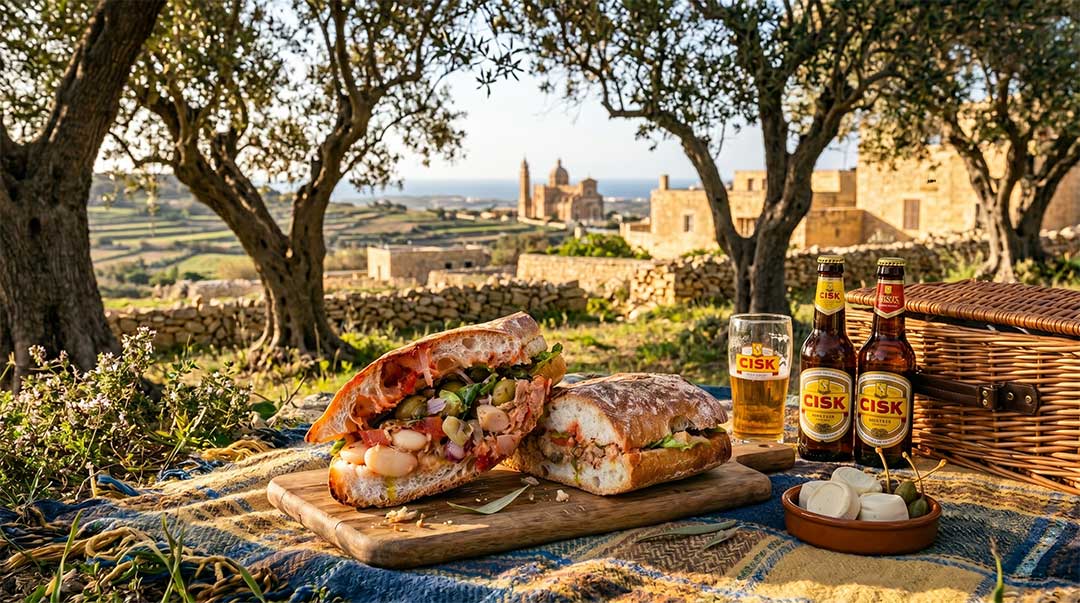
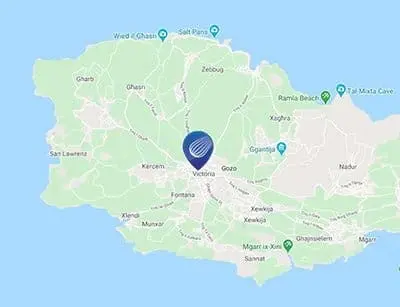
We begin at home. The Maltese ftira is a sourdough ring pressed flat, filled with tuna, bigilla, capers, and whatever else the pantry offers, and eaten without ceremony on every island in the archipelago. It is the product of a larder shaped by centuries of scarcity and trade, by the particular genius of people who have always had to be resourceful. We look at why this combination, on this bread, in this place, makes complete and perfect sense.
Read: Ftira: Malta’s Answer to the Question Nobody Else Thought to Ask
In Nice, the salade niçoise and the pan bagnat are the same thing, except one of them has been left overnight under a weight and become something entirely different. The pan bagnat rewards patience. It rewards the cook who understands that time is an ingredient. We look at why the pressed, soaked, transformed version is the only honest version and what that tells us about a food culture that refuses to rush.
[Read: Pan Bagnat: The Nicoise Salad That Became Something Better]
Madrid is three hundred kilometres from the nearest coastline. Its most iconic street food is a fried squid roll. The apparent contradiction dissolves once you understand how food identity actually forms, which is rarely through geography and almost always through desire, trade, and the particular stubbornness of urban food culture. Madrid’s calamares are a story about a city that decided what it wanted and then simply kept wanting it.
Read: Bocadillo de Calamares: Why Madrid Eats the Sea
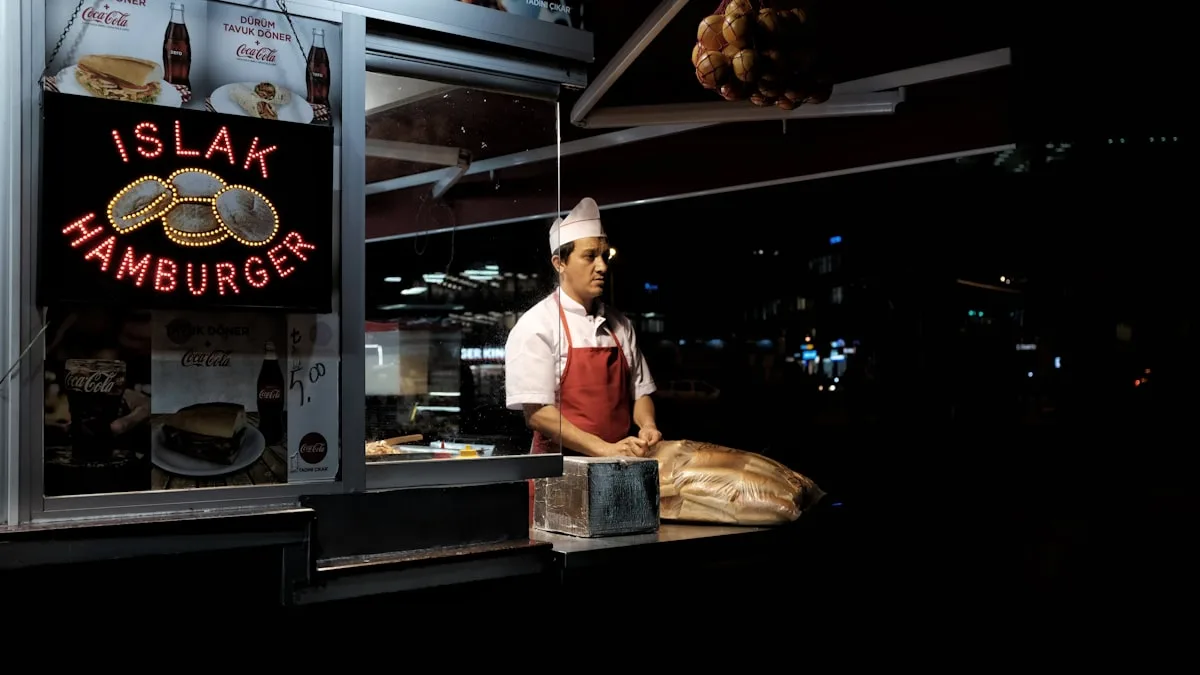
Turkish street sandwich culture has resisted the artisanal turn that has consumed much of the food world. The balik ekmek on the Bosphorus ferries is not trying to be anything other than a fish in a roll. The kokOREÇ of the late-night streets makes no apologies. We look at what happens when simplicity and heat do more work than any amount of curation and why that restraint is itself a form of sophistication.
[Read: Ekmek Arasi: The Turkish Art of Filling Bread Without Overthinking It]
Sabich arrived in Israel with Iraqi Jewish immigrants in the mid-twentieth century and quietly became one of the country’s defining street foods. Fried aubergine, hard-boiled egg, amba, tahini, and pickles, all inside a pillowy pita. It is also a story about diaspora, adaptation, and the way food cultures change when communities move. The sandwich did not survive the journey unchanged. Nothing does.
[Read: Sabich: The Iraqi-Israeli Sandwich That Rewrote a Cuisine]
Kefteji is not delicate. It is fried vegetables, a fried egg, and harissa crammed into a baguette, and it is magnificent. The baguette itself is part of the story: the unlikely legacy of French colonialism that the Maghreb has made entirely its own. We look at Tunisian street food culture and the North African genius for taking what was imposed and turning it into something that belongs to no one else.
[Read: Kefteji: Tunisia’s Fried Everything Sandwich]
The tramezzino is Italy’s contribution to crustless sandwich culture, and it is far more interesting than that description suggests. Born in Turin in 1925, it spread through the bars of Venice and became a cultural institution. Over a century, it accumulated regional variation, fierce local loyalty, and an unlikely amount of cultural weight. We look at how a seemingly modest thing becomes, over time, irreplaceable.
[Read: Tramezzino: The Italian Sandwich That Takes Itself Seriously]
Arayes is a flatbread stuffed with spiced minced meat and grilled until the fat soaks into the bread and chars at the edges. Found across Lebanon, Palestine, and Syria, it exists in regional variations but shares a central principle: the bread is not a vehicle for the filling. The bread and the filling cook together, and neither is the same as it. We look at what happens when the container becomes part of the thing itself.
Read: Arayes: The Levantine Grilled Meat Sandwich You Have Not Been Eating Enough Of
Dakos begins with a barley rusk so hard it could tile a floor. What transforms it is not technique but judgement: the right tomatoes, good mizithra, olives, oregano, and oil that earn their place. It is one of the most satisfying things you can eat at midday in the heat, and it costs almost nothing to make. We look at Cretan food frugality and the principle that scarcity, handled with intelligence, produces something better than abundance handled without it.
[Read: Dakos: The Cretan Open Sandwich That Starts With Almost Nothing]
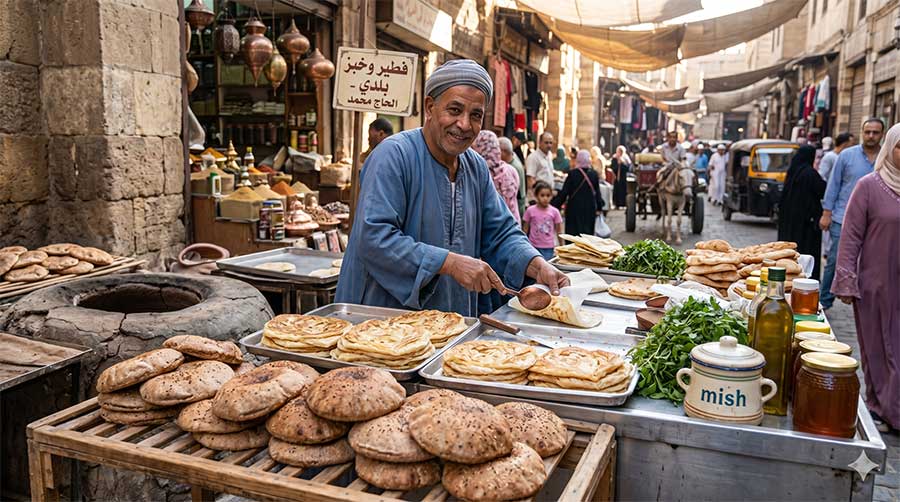
Egypt sits at the junction of the Levantine and North African bread traditions, and its street food reflects that complexity. From the fully stuffed aish baladi rolls of Cairo’s morning streets to the layered feteer eaten on the move, we look at a food culture where bread is rarely a neutral presence. In Egypt, the bread is usually the point. Everything else is what you put with it.
[Read: Feteer and the Egyptian Flatbread Continuum]
Ten sandwiches. Ten arguments. The series runs across the coming weeks, each post a self-contained piece, all of them part of the same conversation about what the Mediterranean actually is when you look at it not through scenery or wine lists but through the things ordinary people eat when they are hungry and in a hurry.
Start anywhere. Come back for the rest.

At Med.kitchen, our passion lies in crafting exceptional culinary experiences through our online platform. We specialise in sharing a wealth of knowledge via articles, recipes, courses, and online mentoring, aiming to inspire both novice and seasoned chefs alike. Our focus has shifted from private dining to being an online source of gastronomic inspiration, allowing you to explore and refine your culinary skills from the comfort of your home..