
TL;DR: Mediterranean preserved foods are not just old recipes. They are agreements with biological time – set conditions, then step back. That patience is what industrial food production has quietly removed from our kitchens.
Mediterranean preserved foods carry something that a vacuum-sealed supermarket jar simply cannot replicate: a working relationship with time, built across generations, that we are quietly dismantling without quite noticing what we are losing.
That is the honest starting point. Not nostalgia, not romanticism about peasant kitchens. Just the observation that ancient food preservation methods were never only about keeping food edible. They were about understanding what happens when you leave things alone long enough to become something better.
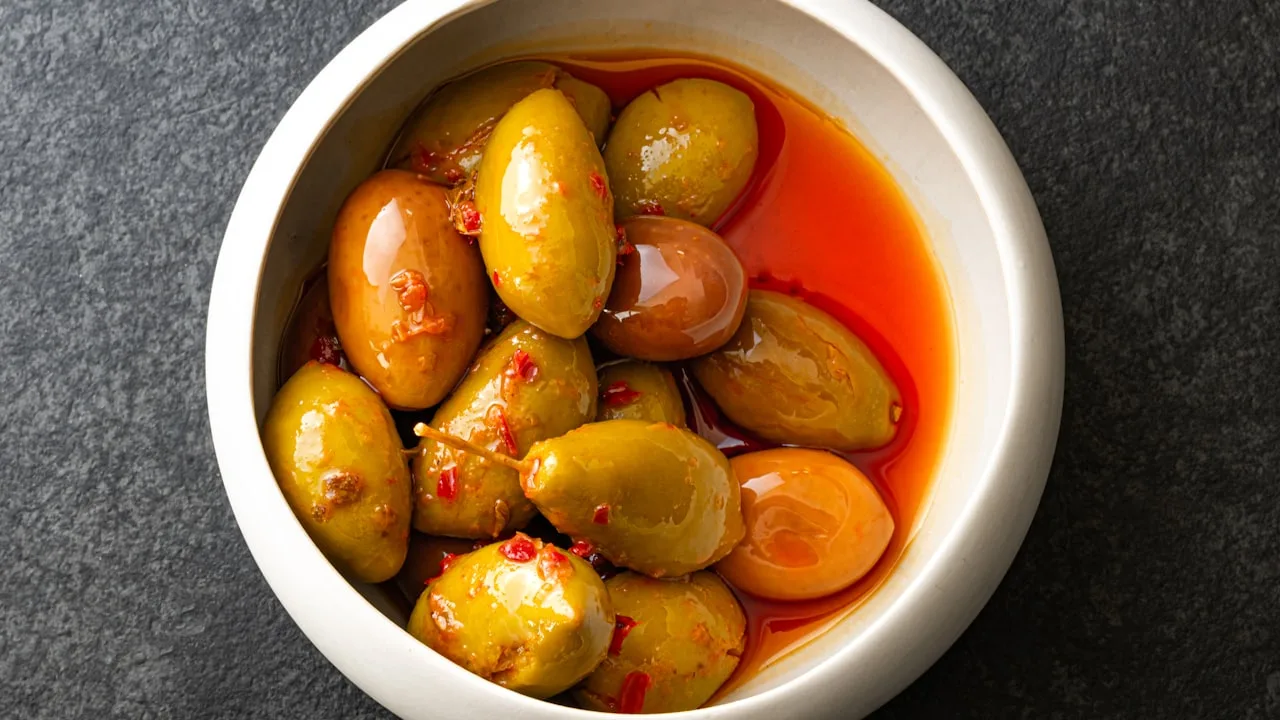
Preserved food, in the Mediterranean sense, is food that has been transformed by waiting. Olives cured in brine for three months. Bottarga, the salted and pressed roe of grey mullet, left to dry until it develops a waxy amber exterior and a flavour that tastes, genuinely, like concentrated sea. Fermented fish sauces along the North African coast that share a direct lineage with the Roman garum that archaeologists keep finding evidence of across excavated kitchens from Pompeii to Carthage.
These are not recipes in the modern sense. They are agreements with biological processes. The cook sets conditions and then, critically, steps back. Time does the rest. That act of stepping back is what we have largely lost the patience for.
The word ‘fermentation’ gets used loosely now, applied to everything from kombucha to sourdough in a way that somewhat flattens its meaning. A working definition worth keeping: fermentation is the controlled transformation of food through microbial activity, where bacteria, yeasts, or moulds convert sugars and proteins into acids, alcohols, and other compounds that change flavour, texture, and shelf life. The control part is important. These processes are guided, not accidental. But they cannot be rushed.
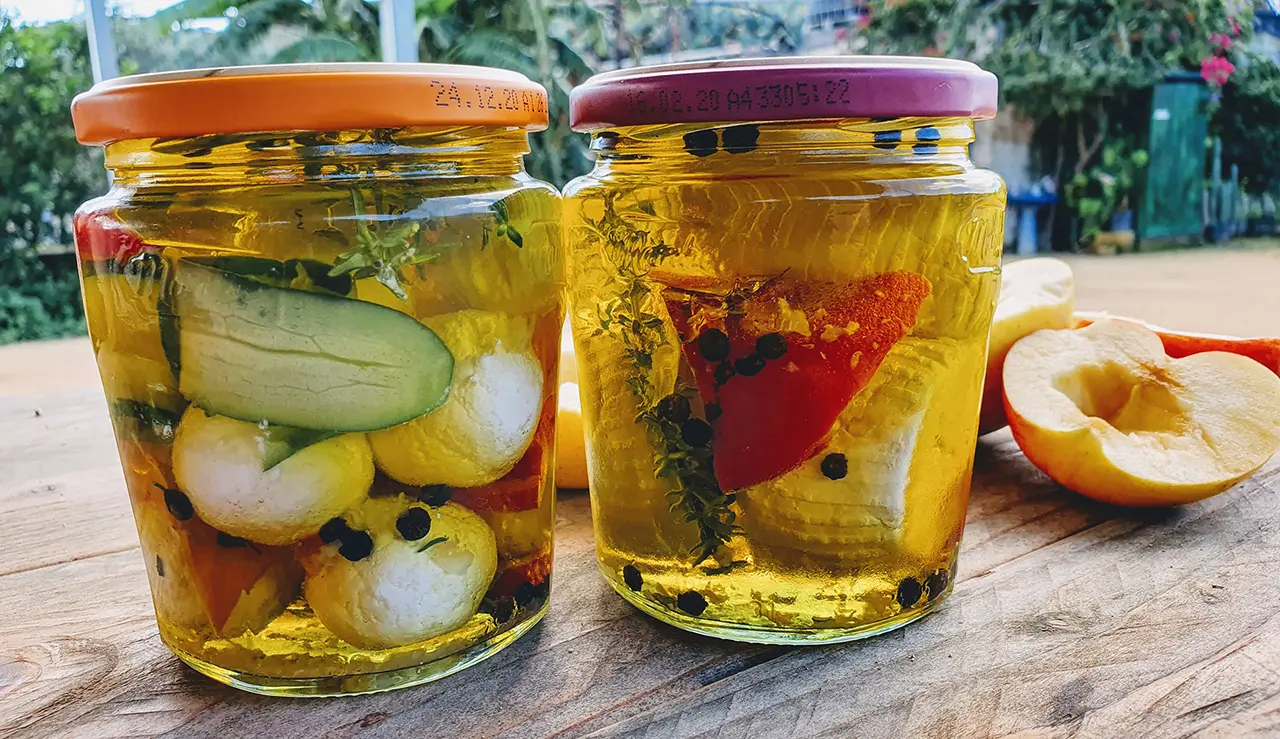
The traditional fermentation techniques of the Mediterranean are remarkably consistent in their underlying logic, even when the ingredients vary dramatically by region. Tunisian harissa paste, properly made, relies on dried chillies that have been fermented slightly before grinding. Greek trachanas, a dried fermented wheat and milk product, uses souring as its preservation mechanism. Preserved lemons in Moroccan cuisine are simply salt and time, and a month of waiting that converts the bitter rind into something sweet, yielding, and deeply aromatic.
The logic is this: create an environment hostile to the microbes you do not want, while favouring the ones that will do useful work. Salt, acidity, and temperature are the primary tools. The practitioner does not need to understand microbiology to apply this correctly. The knowledge is procedural. You learn what the brine should taste like, what the colour change should look like at a given stage, when the smell shifts from sharp to round. That knowledge lives in the hands and the nose, not in a laboratory.
This is worth pausing on. A Sicilian grandmother salting capers does not know that she is creating conditions for lactic acid bacteria to outcompete harmful microorganisms. But she knows exactly how long to leave them, what good looks like at each stage, and when to trust the process rather than interfere. That is a form of expertise that took decades to acquire and that a recipe card cannot fully transmit.
Part of what makes traditional Mediterranean food culture so resistant to documentation is that the relevant information is largely sensory and contextual. The same olive variety fermented in the same brine concentration will behave differently depending on the ambient temperature, the mineral content of the water, and the stage of ripeness at harvest. A written recipe can approximate, but the practitioner reads conditions that no recipe accounts for.
This is not mysticism. It is the ordinary complexity of biological systems. The problem is that our current food culture is built around the expectation that a recipe should be fully reproducible by a stranger in a different kitchen in a different climate. That expectation is reasonable for a sponge cake. It is quietly destructive when applied to a ferment that was always meant to be adjusted in response to local conditions.
The slow food philosophy, formalised by Carlo Petrini in Italy in the late 1980s as a direct response to the opening of a McDonald’s near the Spanish Steps in Rome, put political language around something that Mediterranean food culture had always practised without needing to name it. Good food takes time. Time is not inefficiency. Time is an ingredient.
That reframing matters because it identifies the real conflict. Preserved foods and fermented foods and time are not opposed to modern life because of some failure of logistics. They are opposed to modern life because modern life has decided, at a structural level, that waiting is a problem to be solved rather than a process to be respected.
I keep a jar of preserved lemons on the kitchen shelf that takes about four weeks to be usable. It costs almost nothing to make. It requires about ten minutes of actual effort. But it requires four weeks of not opening the jar. That constraint feels almost strange now, which tells you something about where we have ended up.
Industrial food production can replicate some of the outputs of traditional fermentation fairly convincingly. Acidified olives taste, broadly, like cured olives. Vinegar-preserved vegetables have the sharpness of lacto-fermented ones. Flavour-adjusted fish sauce hits the umami notes that aged garum hits. The biochemical profiles, however, are not the same, and neither is the microbial diversity of the finished product.
This is not a health claim. It is a quality claim. The depth of flavour in a properly aged bottarga or a genuinely fermented preserved lemon is not something that short-cut processing can reproduce fully, because that depth comes from complex chemical transformations that require time to unfold. What you lose in acceleration is not just tradition. It is resolution. The flavour becomes flatter, less layered, less interesting.
Beyond flavour, there is the question of what the knowledge itself is worth. Every traditional craft that becomes commercially consolidated at scale loses something in the transition. Not everything, but something. When preserved anchovy production shifts from small Catalan or Cantabrian operations to industrial processing lines, the procedural knowledge held by the people who used to do it by hand does not transfer automatically. It disperses. Some of it disappears.
Recovering this relationship with time does not require a wholesale rejection of convenience. That would be the wrong argument to make and, practically speaking, an unwinnable one. What it requires is something more specific: a willingness to designate certain foods and certain processes as ones where waiting is the point, not a problem.
That is a reorientation of category, not a reorientation of lifestyle. You do not need to make your own bottarga. But it is worth knowing what it is, how it is made, and why the industrial version tastes different. That knowledge changes how you eat. It changes what you consider worth paying for. It creates a different kind of attention to food that is not about purity or perfectionism, but about understanding cause and effect.
The Mediterranean food culture that produced these techniques was not precious about them. Preserved foods were practical. They were the difference between eating well in winter and not eating well. The patience was built into the necessity. We have removed the necessity. The question is whether we can retain the patience anyway, and whether we think it is worth the effort to try.
There is something instructive about the fact that the foods with the most complex flavours in the Mediterranean pantry are, without exception, the ones that take the longest to make. That correlation is not incidental.

At Med.kitchen, our passion lies in crafting exceptional culinary experiences through our online platform. We specialise in sharing a wealth of knowledge via articles, recipes, courses, and online mentoring, aiming to inspire both novice and seasoned chefs alike. Our focus has shifted from private dining to being an online source of gastronomic inspiration, allowing you to explore and refine your culinary skills from the comfort of your home..