
TLDR: MSG has a reputation as a modern, foreign additive, but the Mediterranean was concentrating the same compound in a fermented fish sauce called ‘garum’ thousands of years ago. The anchovies, aged cheeses, and sun-dried tomatoes at the heart of Mediterranean cooking are naturally rich in the same flavour-enhancing glutamates. The fifth taste was never an import. It was always here.
There is a white powder in kitchens across Asia that has spent the better part of a century being treated like a suspect. Monosodium glutamate, or MSG, has been blamed for headaches, for addiction, and for making food taste “artificial.” In the West, it became shorthand for cheap, processed, and vaguely foreign. Parents read it on crisp packets and worried. Restaurants boasted of not using it as though that were a virtue.
The irony is that MSG is not a modern invention, not a chemical trick, and not remotely foreign to the Mediterranean table. It is a purified, crystalline form of something your kitchen has always contained. The aged pecorino you grate over the pasta. The anchovy is dissolved into a soffritto. The tomato is left to blister in the August sun until its skin splits and its flesh concentrates into something almost sweet. These are all glutamate delivery systems. You have been cooking with the fifth taste your whole life. You just didn’t have a name for it.
Glutamate is an amino acid. It occurs naturally in protein-rich and fermented foods, and when it is present in its free form, unbound from other compounds, it triggers a specific response on the palate. Not salty. Not sour. Not sweet or bitter. Something deeper, rounder, more persistent. The Japanese called it “umami”, which translates loosely as “pleasant savoury taste”, though that translation does it no justice. Umami is the reason a slow braise tastes different from a quickly cooked one. It is the reason a tomato sauce made with anchovies does something to you that a tomato sauce without them simply does not.
MSG is that same compound, isolated and stabilised into a powder. Sprinkle it on food, and you are adding nothing the food doesn’t already contain in some form. The body cannot tell the difference. It doesn’t try to.
Long before Kikunae Ikeda isolated glutamate in a Tokyo laboratory in 1908 and gave it its name, Mediterranean cooks had been concentrating it deliberately and deploying it at scale. They just called it garum.
Garum was a fermented fish sauce, made from anchovies, mackerel, and sardines packed in salt and left in the sun for weeks until the proteins broke down into a dark, intensely savoury liquid. It sounds unappetising. It smelt, by all accounts, extraordinary. Pliny the Elder called it “poison made from rotting fish”, which tells you something both about Pliny and about the sauce’s potency. The Romans ignored him and used it on almost everything.
The factories that made garum were built outside city walls, for obvious reasons. Archaeologists have found their remains the length of the Mediterranean, in Spain, Portugal, North Africa, and most famously in Pompeii, where the eruption of Vesuvius preserved the whole enterprise mid-production. Entire coastal towns built their economies around it. There were budget grades and premium grades, the finest of which fetched prices comparable to good perfume’s. There was even kosher garum, produced for the empire’s Jewish communities. This was not a niche condiment. It was the seasoning infrastructure of an entire civilisation.
What garum was doing, chemically, is exactly what MSG does. The fermentation process broke fish proteins down into free amino acids, glutamate among them, and the result was a liquid that made everything around it taste more intensely of itself. A Roman cook reaching for the garum jug was doing precisely what a Tokyo chef does when they reach for the MSG. The mechanism is identical. Only the vessel differs.
Once you understand what glutamate does and where it lives, the Mediterranean pantry looks different.
Anchovies cured in salt are among the most glutamate-dense foods in existence. Not by accident, the curing process is a slow fermentation, a miniature version of what happened in those Roman coastal factories. When you mash an anchovy into olive oil at the start of a dish ordish or lay one flat across a pizza before it goes into the oven, you are not just adding a fishy note. You are releasing a compound that deepens and amplifies every other flavour in the pan.
Aged hard cheeses do the same thing through a different route. The longer a pecorino or a Parmigiano sits, the more its milk proteins break down into free amino acids. A cheese aged for two years contains several times the glutamate of a fresh one. This is why you don’t just eat Parmesan;Parmesan; you use it as a seasoning. A handful of grated Parmigiano over a bowl of ribollita is not a garnish. It is chemistry.
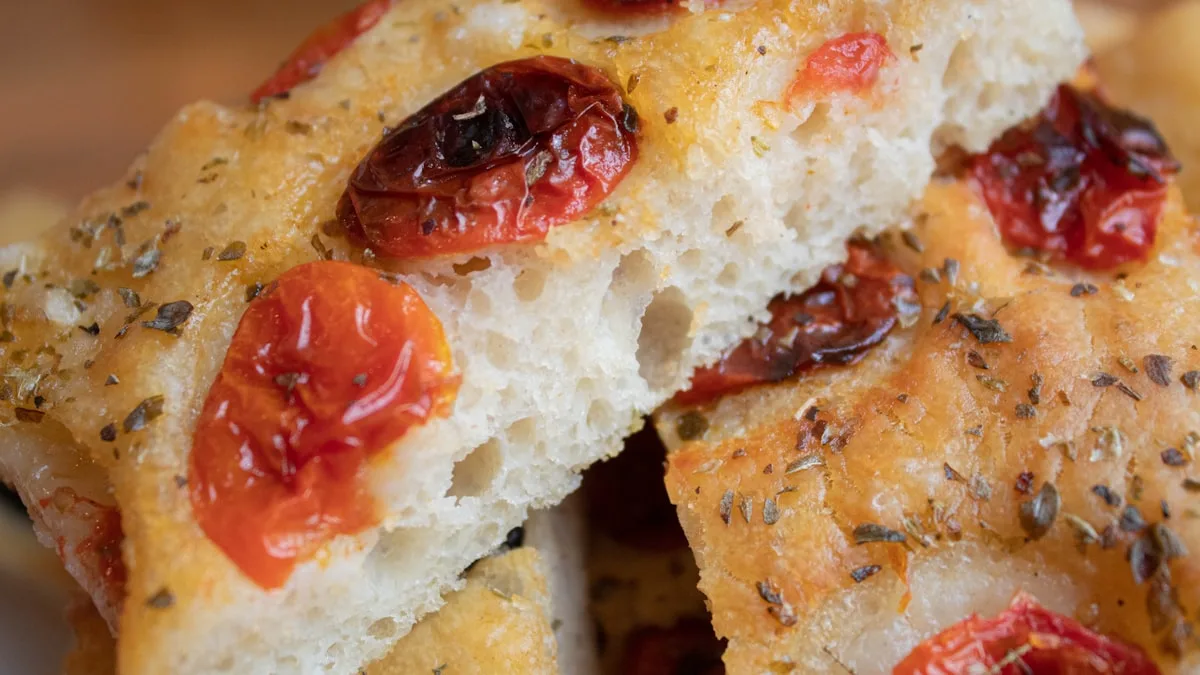
Tomatoes are the most democratic source of all. Fresh, they contain moderate levels. Slow-roasted, sun-dried, or reduced into paste, the water evaporates and the glutamate concentrates. A sun-dried tomato is essentially a small, wrinkled flavour bomb. The Mediterranean summer has been doing this work for millennia.
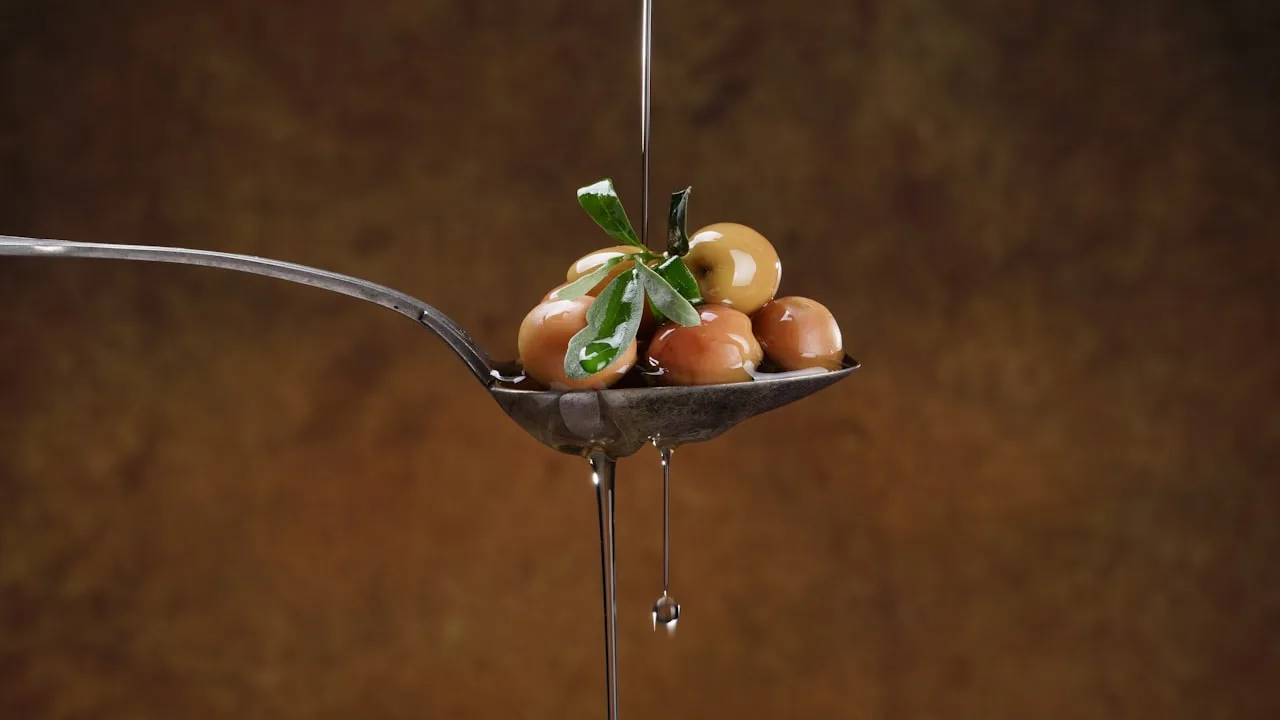
Dried mushrooms, fermented olives, slow-cooked pulses, wine reductions, and the pantry staples that define this cuisine are almost uniformly high in the compounds that make food taste deeply satisfying. The Mediterranean diet didn’t become one of the most beloved food cultures on earth by accident. Part of what it was doing, instinctively and over centuries, was maximising the fifth taste.
Garum itself disappeared from the Western Mediterranean after the fall of Rome, at least under that name. But it didn’t vanish entirely. On the Amalfitan coast south of Naples, a small tradition survived and eventually became a product: colatura di alici. Made from anchovies packed in salt, pressed under weights and slowly drained over months, colatura is amber-coloured, intensely aromatic, and so concentrated that a few drops will do what half a bottle of lesser condiments cannot. It is, in all but name, garum. The tradition was carried on in monasteries through the Middle Ages and eventually re-emerged as a regional speciality that now holds protected status.
A bottle of colatura on your shelf is a direct line back two and a half thousand years. You can use it exactly as a Roman cook would have: a few drops into pasta, into a dressing, or into a braise that needs lifting without any single ingredient announcing itself. The flavour it adds doesn’t taste of fish. It tastes of depth.
MSG did not arrive in the Mediterranean from somewhere else, and the Mediterranean has no monopoly on discovering what glutamate can do; fermented fish sauces were being made across Asia long before Rome built its first factory. But the story of umami in the West has nothing to do with Eastern influence. It developed here, independently, from the same instinct: that certain foods, when salted, fermented, aged, or dried, become something greater than themselves. The fifth taste wasn’t borrowed. It was arrived at separately, through the same logic, using the fish and the salt and the sun that the Mediterranean has always had in abundance.

At Med.kitchen, our passion lies in crafting exceptional culinary experiences through our online platform. We specialise in sharing a wealth of knowledge via articles, recipes, courses, and online mentoring, aiming to inspire both novice and seasoned chefs alike. Our focus has shifted from private dining to being an online source of gastronomic inspiration, allowing you to explore and refine your culinary skills from the comfort of your home..