
TL;DR: Egyptian flatbread is not a side dish; it is the point. Aish baladi, meaning ‘life’, is built to be filled. Feteer layers that idea further. Together they reveal how Egypt uses bread as a cultural and culinary centre of gravity.
Egypt does not sit quietly at the edge of culinary history. It sits at the centre of it, absorbing influences from every direction and producing something that feels entirely its own.
When you think about Egyptian bread, you are not really thinking about one thing. You are thinking about a continuum, a living spectrum of flatbreads that range from the humble, everyday aish baladi to the theatrical, layered feteer. Understanding that continuum tells you something important, not just about Egyptian food, but about how a culture uses bread as a primary vehicle for meaning rather than a supporting player.
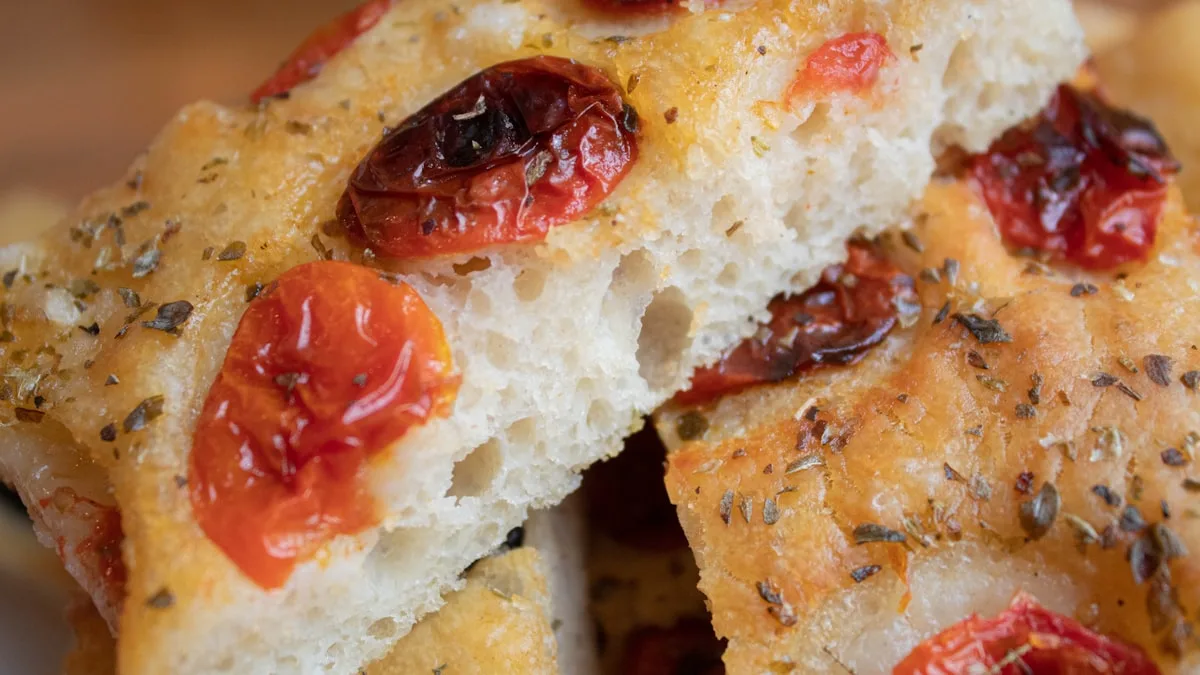
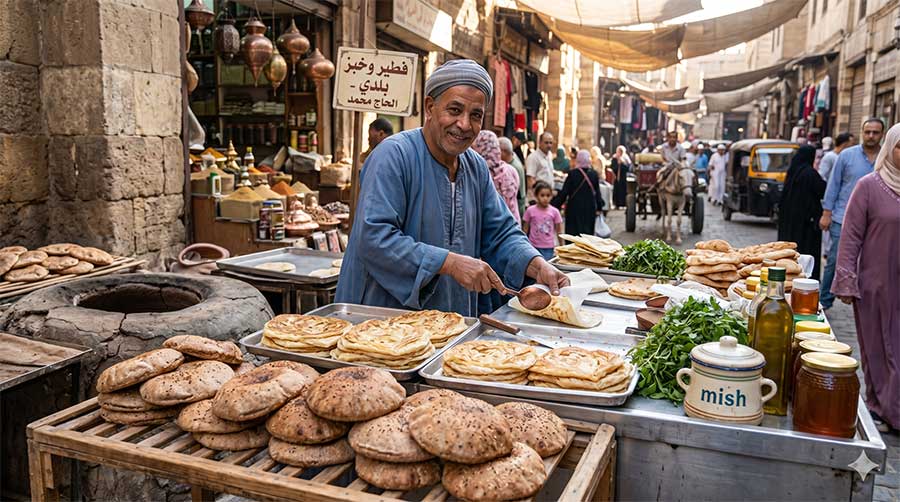
Aish baladi is the bread most Egyptians grow up eating. Baked at high heat in wood-fired or gas ovens, it puffs into a hollow pocket, creating an interior space that is less a design feature and more a philosophical statement. The bread is made to be filled. Its existence anticipates the filling.
The name tells you something too. ‘Aish’ does not simply mean bread in Egyptian Arabic. It means ‘life’. That is not poetry or marketing. That is the literal word Egyptians use for bread, and it reflects a relationship with the staple that most Western food cultures have long since abandoned.
Walk through Cairo’s older neighbourhoods at six in the morning, and you will find stacks of aish baladi being passed hand to hand, wrapped in newspaper, tucked under arms. The bread is warm, slightly charred at the edges, and it has a wheaty depth that commercially produced flatbreads cannot replicate. It is the foundation on which Cairo’s breakfast culture is built.
If an aish baladi is the vessel, ful medames is the most natural thing to put inside it. Slow-cooked broad beans, seasoned with cumin, lemon, garlic and olive oil, spooned into the pocket of a warm flatbread. The ful medames sandwich is arguably the most important single food item in Egyptian street food culture, and it deserves more serious attention than it typically receives outside the region.
What makes it interesting from a culinary structure perspective is the balance of temperatures and textures. The fool is warm and soft, almost liquid in consistency when cooked well. The bread provides the chew and the slight resistance. Together they create something cohesive, where neither element overwhelms the other. This is not a coincidence of tradition. It is a refined interaction developed over centuries.
The full medames sandwich also absorbs additions gracefully. A fried egg pressed into the pocket. A spoonful of tahini. Pickled vegetables on the side or tucked in with the beans. Each Cairo breakfast food vendor has a slightly different configuration, and regulars tend to be loyal to their preferred version with a dedication that borders on territorial.
This specificity matters. It means the sandwich is not generic street food. It is localised, personal and deeply tied to neighbourhood identity. That kind of granular specificity is one of the markers of a genuinely mature food culture.
Feteer meshaltet occupies a different position entirely. Where Aish Baladi is democratic and quotidian, feteer is theatrical. Made by stretching thin layers of dough with generous amounts of butter or clarified fat between each sheet, then folded and baked until the layers separate into something simultaneously crisp and yielding, feteer is not background bread. It is the point of the dish.
The layered structure of feteer has a technical elegance that draws comparisons to pastry traditions elsewhere, from Moroccan warqa to Turkish yufka, and the resemblance is not superficial. Egypt sits at a genuine crossroads between North African and Levantine culinary traditions, and feteer reflects that inheritance honestly. It has absorbed influences without losing its particular character, which is the mark of a confident culinary culture rather than an imitative one.
On the street, feteer is eaten in ways that challenge how you think about the bread-filling relationship. When eaten as street food, the filling, whether savoury with cheese and egg or sweet with honey and cream, is not placed inside the bread so much as incorporated during the cooking process. The bread folds around the filling, or the filling becomes part of the layering. The distinction sounds small. It is not.
With aish baladi and the ful medames sandwich, the bread is excellent, but it serves as the filling. The filling drives the experience. The bread enables it. This is the dominant model in most sandwich cultures around the world, and there is nothing wrong with it. But feteer disrupts that hierarchy completely.
Eating feteer is primarily an experience of bread. The filling modifies that experience, adds sweetness or salt, and introduces contrast. But you are always, first and foremost, eating layered pastry. This inversion of the usual bread-filling dynamic is what makes feteer so interesting to think about and what makes it slightly difficult to categorise as ‘street food’ in the conventional sense.
It is closer, in structural terms, to a Breton galette or a South Asian paratha, where the bread itself contains enough complexity and craft to be the main event. The filling earns its place by working with the bread rather than dominating it.
What Egypt demonstrates, quite clearly, is that flatbread culture is not a monolith. The breadth of the Egyptian flatbread tradition, from thin, crisp-edged aish baladi to the multi-layered richness of feteer, represents a spectrum of technique, purpose and social context. Each bread asks something different of the person eating it and something different of whatever accompanies it.
Aish shamsi, the sun-dried variant made with a sourdough-style fermentation, adds another layer of complexity. It is denser, chewier, and more overtly sour, and it pairs differently with the same fillings. A spoonful of ful medames inside aish shamsi sits differently in the mouth than it does inside aish baladi. The filling has not changed. The bread has changed everything.
This is the core insight that Egyptian street food offers anyone willing to pay attention. Bread is not neutral packaging. It has flavour, texture and structure, and each of those qualities actively shapes the eating experience. Treating bread as inert wrapping, which much of the contemporary sandwich industry effectively does, misses this entirely.
Cairo breakfast food culture operates at a pace and scale that can feel overwhelming if you are not expecting it. The morning hours, particularly around six to nine, see a city in collective motion. Bread is at the centre of that motion. Vendors move quickly, transactions are brief, and the food is built on accumulated familiarity. Customers know exactly what they want, and they get it fast.
What strikes you, if you slow down enough to watch, is how little of the transaction is about novelty. The pleasure is repetition. The full medames vendor on the corner of a particular street in Shubra has been making the same sandwich in the same way for years, and the queue in front of him reflects a trust that no amount of branding or innovation can replicate. The consistency is the product.
This is worth sitting with for a moment. Egyptian street food at this level does not try to surprise you. It tries to reliably deliver something excellent. The innovation happened centuries ago. What remains is the refinement of execution.
The question worth asking, for anyone thinking seriously about food culture, is how many other bread traditions we have flattened into background noise by treating the bread as merely functional. Egypt suggests that doing so costs us more than we realise.

At Med.kitchen, our passion lies in crafting exceptional culinary experiences through our online platform. We specialise in sharing a wealth of knowledge via articles, recipes, courses, and online mentoring, aiming to inspire both novice and seasoned chefs alike. Our focus has shifted from private dining to being an online source of gastronomic inspiration, allowing you to explore and refine your culinary skills from the comfort of your home..