
TL;DR: The ftira is a Maltese sourdough flatbread sandwich built from preserved, traded, and foraged ingredients born of necessity. On an island with poor soil and no rivers, it became the clearest expression of Maltese culinary ingenuity and Mediterranean influence.
The ftira is not merely a sandwich. It is a document, pressed flat and baked into dough, that tells you nearly everything you need to know about how a people survive, adapt, and eventually thrive on an island that should not, by most agricultural logic, be able to feed anyone, particularly well.
Malta is roughly 316 square kilometres. It has almost no rivers, thin and rocky soil, and a climate that swings between punishing summer heat and wet, unpredictable winters. For most of its history, feeding its population required either extraordinary ingenuity or reliable access to trade routes. Fortunately, it had both. But what developed from that constraint is something far more interesting than simple survival cooking.
The island sits at the crossroads of the central Mediterranean, which means it absorbed culinary influence from North Africa, sicily, the Levant, and the Iberian Peninsula across centuries of successive occupation. Arab, Norman, Knights Hospitaller, French, and British – each left traces in the kitchen. What emerged was not a confused hybrid but something coherent and deeply pragmatic. The ftira is perhaps the clearest expression of that coherence.
The word ‘ftira’ (pronounced roughly as ‘f-tee-rah’) is where things immediately become complicated, and the complication is itself revealing. Ask a Maltese person what a ftira is and the answer depends almost entirely on where they are from.
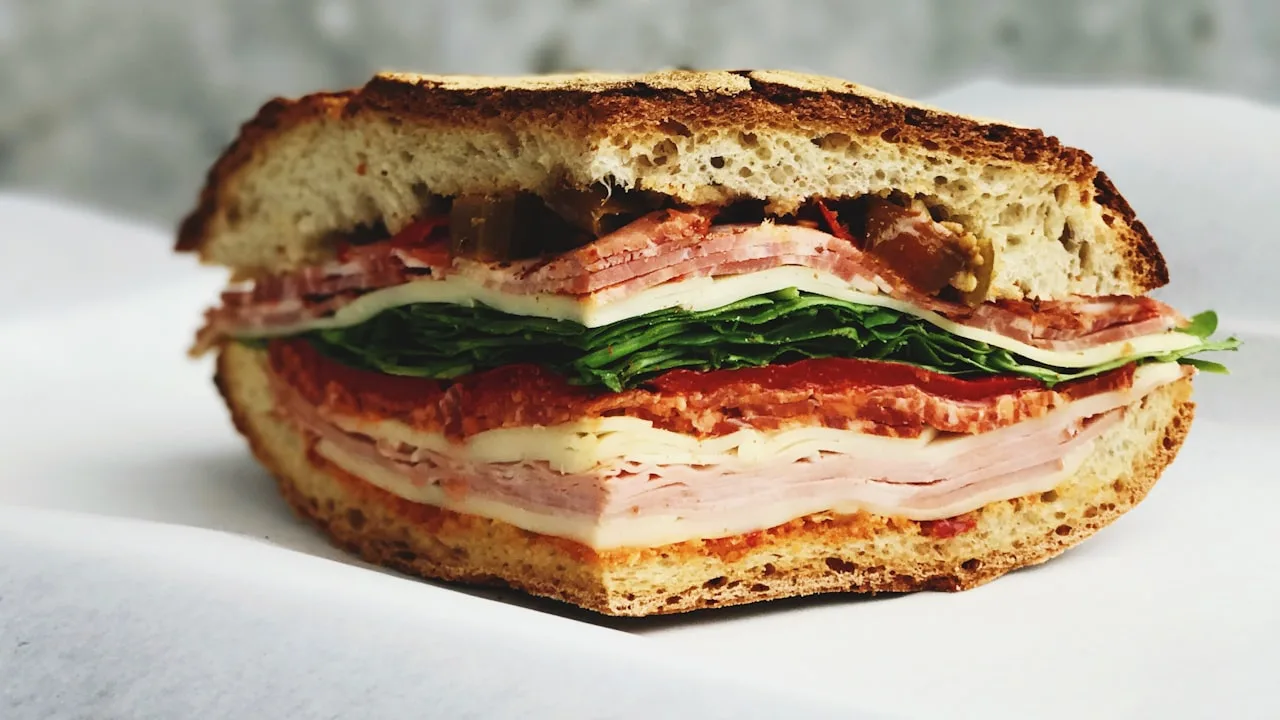
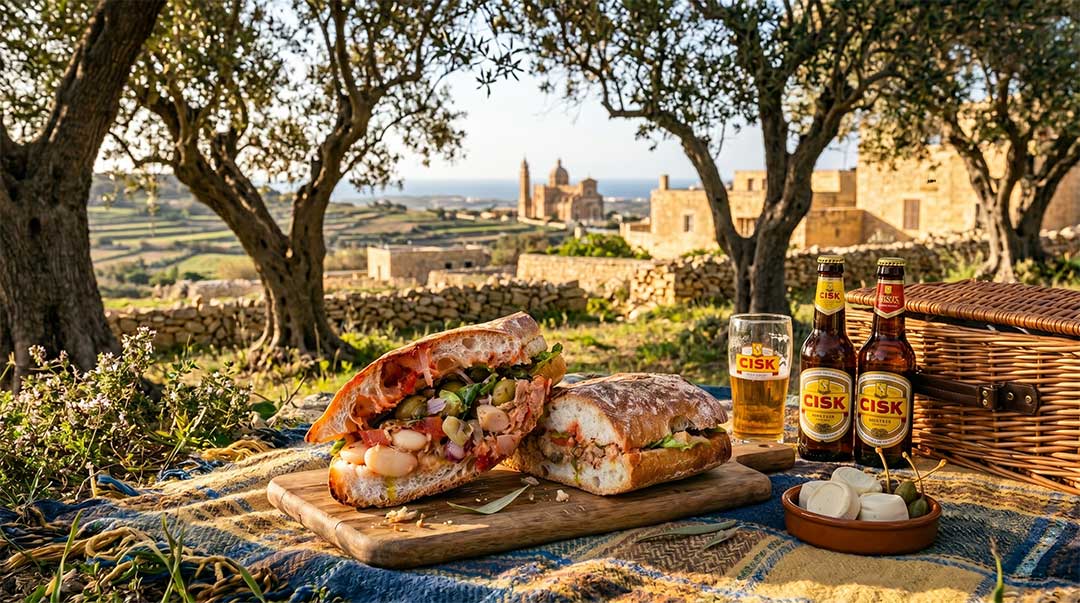
On Malta, the word refers primarily to the filled sandwich: a sourdough flatbread, ring-shaped or oval, loaded with tuna, bigilla, capers, tomatoes, olives, and olive oil, and eaten as a meal in itself. This is the ftira most visitors encounter, the one that earned UNESCO recognition in 2020, and the one this article is largely concerned with.
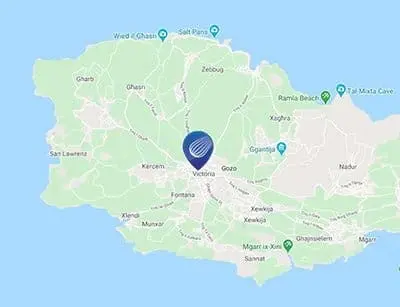
Cross to Gozo, and the word quietly shifts its meaning. On the sister island, ftira refers first and most naturally to something closer to a pizza: a round flatbread baked with toppings, typically tomato, local cheese, anchovies, capers, and olives, cooked in a wood-fired oven and eaten hot. The Gozitan ftira is a serious thing in its own right, with its own conventions, its own loyal following, and its own claim to authenticity. It is not a variant or a derivative. It is simply what ‘ftira’ means if you grew up in Gozo.
The two things share a bread and a set of ingredients. They share a name. What they do not share is form, context, or occasion. One is assembled cold and eaten on the move; the other is baked hot and eaten at the table. The overlap in vocabulary reflects the shared root, both descend from the same flatbread tradition, but the divergence reflects what happens when two small communities separated by a narrow channel develop their own food cultures over centuries without quite agreeing on the terms.
This ambiguity is worth sitting with rather than resolving. The ftira does not have one fixed identity. It has a Maltese one and a Gozitan one, and anyone who tells you otherwise is probably from one island and has not spent enough time on the other.
The filled version, the Maltese ftira sandwich, is where things get culturally interesting. The classic combination involves tuna, bigilla, capers, tomatoes, olives, and sometimes a slick of good olive oil. Each of those ingredients has a story rooted in scarcity, trade, and the specific logic of Mediterranean preservation.
Start with the tuna. Malta has always had access to the sea, and tuna was historically abundant in Maltese waters. Preserved tuna in olive oil, canned or jarred became a pantry staple not because it was fashionable but because it kept, it was cheap, and it provided protein without requiring refrigeration or slaughter. The choice of tuna in the ftira tuna bigilla combination is not accidental. It reflects a culture that learned to extract maximum nutrition from what the sea offered.
Bigilla is less well known outside Malta, and it deserves more attention. It is a dip or paste made from ful bit-tewm, broad beans cooked with garlic, olive oil, and herbs. Broad beans have grown in Mediterranean soil for millennia. They are hardy and nitrogen-fixing and require far less coddling than wheat. Bigilla is earthy, slightly bitter, and deeply savoury. It functions in the ftira the way hummus functions in a Lebanese wrap as a flavour anchor that binds everything else together. Its presence also reflects the legume-heavy diet that poor agricultural communities across the Mediterranean relied upon when meat was scarce or expensive.
Capers grow wild in Malta. You will find them pushing through cracks in the bastions of Valletta and sprawling across dry stone walls across Gozo. They require almost no cultivation, thrive in heat and drought, and provide a sharp, briny punch that lifts an otherwise dense combination of flavours. Their inclusion in the ftira is not a design decision. It is geography.
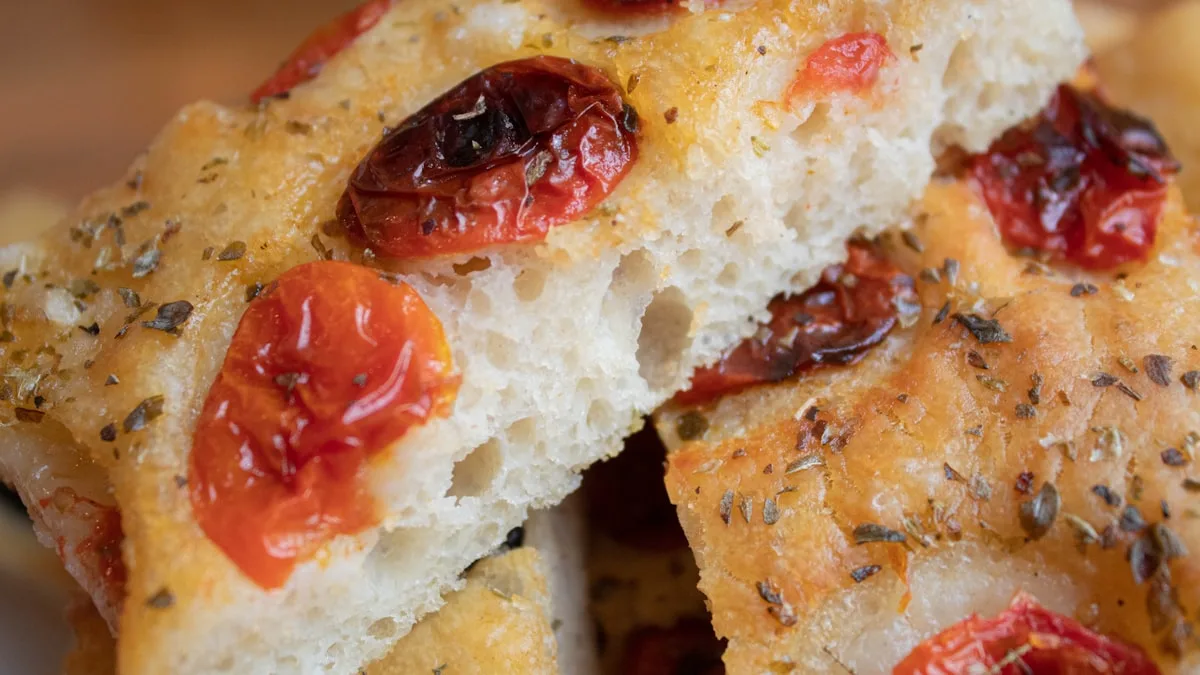
The bread itself is worth examining separately. Traditional Maltese bread is leavened with a natural starter, which predates commercial yeast by centuries. Sourdough processes were the norm in Mediterranean baking long before they became a lifestyle choice in northern European cities. The ftira’s slightly sour, complex crumb is not an affectation. It is the result of a baking tradition that never really stopped, even as the rest of the world briefly abandoned it.
The ring shape open at the centre, is also practical. It allows the bread to bake more evenly in a hot oven with minimal fuel, maximising surface area and ensuring the crust develops properly without requiring an extended bake. Even the shape is a small act of resourcefulness.
There is a tendency, particularly in food writing, to romanticise poverty cooking after the fact. The narrative goes, necessity produced beauty, hardship generated wisdom, and so on. That is partly true, but it flattens something more interesting. The ftira is not a beautiful accident. It is the product of a culture that learnt, over centuries, to read its landscape and its trade routes with real precision.
Olives were grown and pressed locally. Salt was harvested from coastal flats. Fish was caught, preserved, and traded. Legumes were cultivated in small plots. Every component of the classic Maltese ftira sandwich corresponds to a specific ecological or economic reality of the island. Nothing is frivolous. Nothing requires long supply chains or complex technique. The whole assembly can be constructed from ingredients that either grow wild, keep indefinitely, or come reliably from the sea.
That is not a coincidence. That is a system, developed intuitively over generations, that happens to produce something genuinely delicious. The ftira Malta has always eaten is essentially a compressed inventory of what the island could reliably produce and preserve.
What strikes me most about the ftira, when considered as a cultural object rather than a snack, is how much it resists the usual categories. It is not haute cuisine. It is not street food in the way that term usually implies disposability or informality. It sits somewhere between daily sustenance and cultural statement, eaten at building sites and beach lunches and family kitchens with equal ease.
The UNESCO inscription formalised something Maltese people already knew intuitively that this bread, and the way it is filled and shared, carries a kind of knowledge that matters. Not because it is ancient or exotic, but because it encodes a genuinely intelligent response to a specific environment. In an era where food systems are becoming increasingly fragile and supply-dependent, there is something quietly instructive about a culture that solved the same problem centuries ago with beans, capers, and a sourdough starter.
Perhaps the more useful question is not what the ftira is, but what we might notice about our own food culture if we examined it with the same level of ecological honesty. The answer, in most cases, would probably be less flattering.
The ftira uses a natural sourdough leavening and is baked at high temperature to produce a specific chewy, open crumb that distinguishes it from unleavened flatbreads like pitta or the denser, rounder breads common elsewhere in the Mediterranean. Its ring or oval shape is also distinctive. The combination of texture, crust, and mild sourness makes it particularly well suited to absorbing olive oil and holding robust fillings without becoming soggy.
Bigilla is less commonly exported than other Maltese products, though speciality Mediterranean food shops occasionally stock it. Broad bean pastes from other cuisines can provide a rough substitute, but the specific seasoning of Maltese bigilla, particularly the garlic and herb balance, is fairly distinctive. If you are making an authentic ftira-tuna-bigilla combination at home, it is worth attempting a simple homemade version using dried broad beans, garlic, olive oil, and flat-leaf parsley.
UNESCO inscribed the art of making Maltese ftira onto its Intangible Cultural Heritage list in 2020, recognising not just the bread itself but the broader knowledge system surrounding its production, the use of natural fermentation, the wood-fired baking tradition, and the communal practices associated with its preparation and sharing. The inscription acknowledges the ftira as a living cultural practice rather than a historical artefact.
By most measures, yes. The classic Maltese ftira sandwich combines complex carbohydrates from sourdough bread, protein from tuna and bigilla, healthy fats from olive oil and olives, and fibre and micronutrients from capers, tomatoes, and legumes. It is broadly consistent with Mediterranean dietary principles, which have been studied extensively for their association with cardiovascular health and longevity. It is also, frankly, more nutritionally coherent than most things sold as ‘healthy options’ in contemporary food retail.

At Med.kitchen, our passion lies in crafting exceptional culinary experiences through our online platform. We specialise in sharing a wealth of knowledge via articles, recipes, courses, and online mentoring, aiming to inspire both novice and seasoned chefs alike. Our focus has shifted from private dining to being an online source of gastronomic inspiration, allowing you to explore and refine your culinary skills from the comfort of your home..