
TL;DR: Madrid sits 300 kilometres from the sea, yet its most iconic street food is a fried squid roll. The bocadillo de calamares thrives because of trade history, bar culture, and civic identity, proof that food belonging is built, not simply inherited from geography.
Madrid has no coastline, no harbour, and no trawlers. Yet the city’s most beloved street food is a fried squid roll, eaten standing up at a bar, usually before noon, and considered entirely normal.
That contradiction is worth sitting with for a moment. Most food cultures develop around what’s available locally. Coastal towns eat fish because fish is there. Pastoral regions eat lamb because sheep are there. Madrid, landlocked in the centre of the Iberian peninsula at an altitude of around 650 metres, should by rights be a city of roasted meats, cured pork, and chickpea stews. And it is all of those things. But ask a madrileño what they want at half past eleven on a Saturday morning, and there’s a reasonable chance they’ll say calamares.
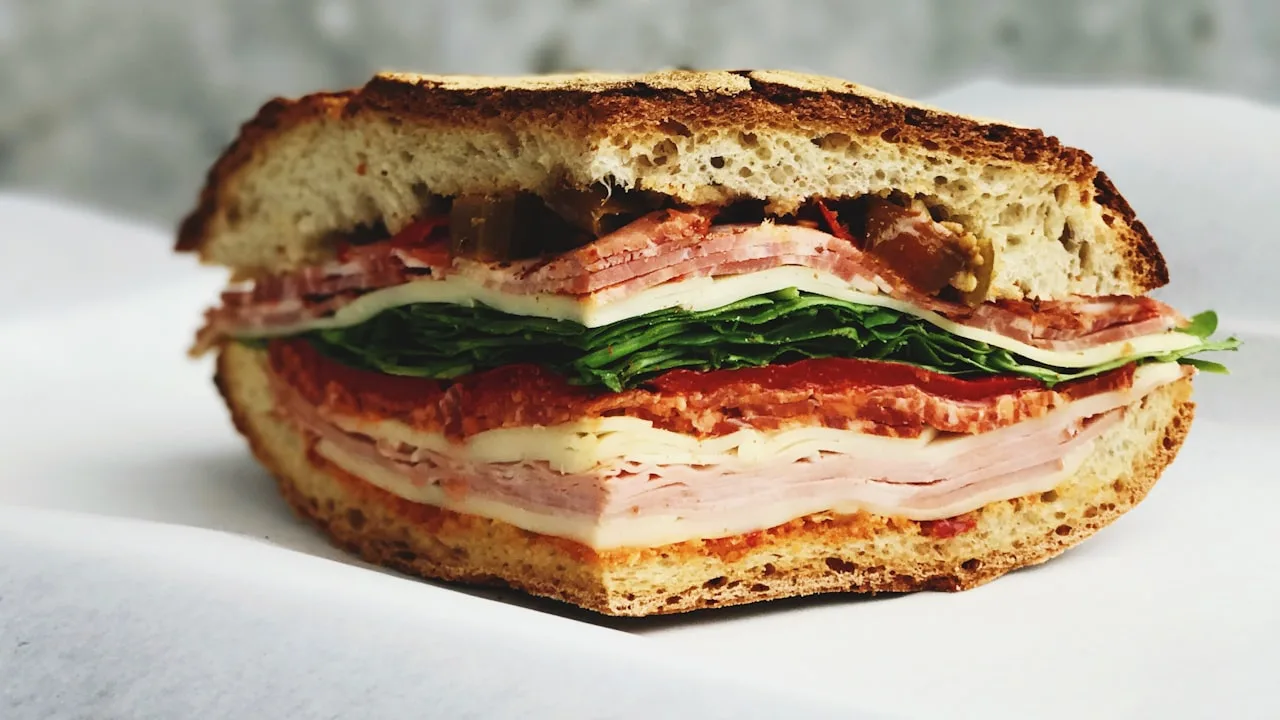
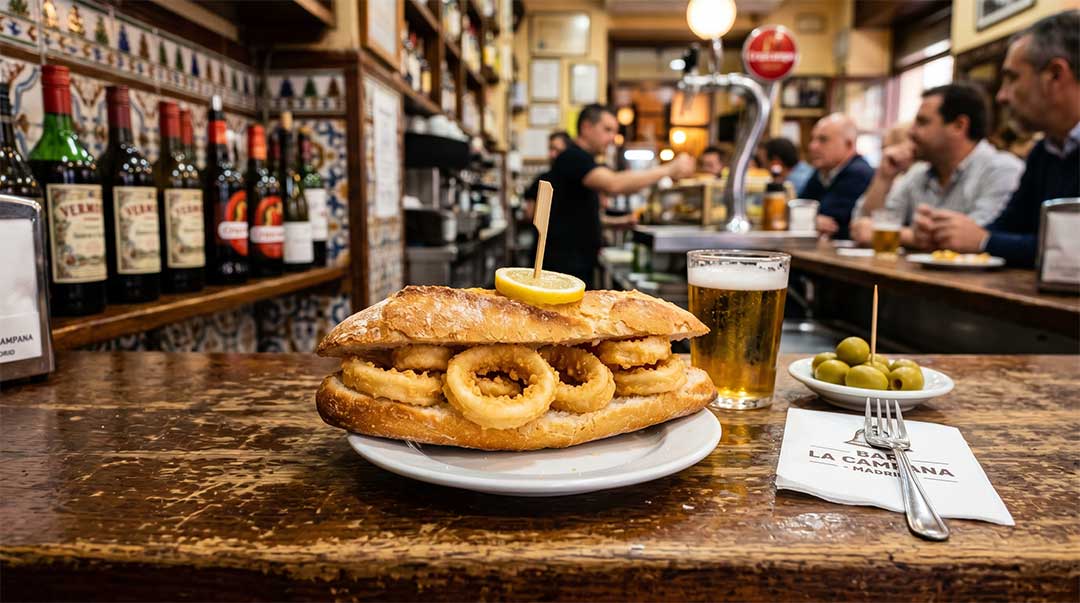
For those unfamiliar, a bocadillo de calamares is straightforward enough in description. It’s a crusty Spanish roll, typically a barra, similar in shape to a short baguette, stuffed with rings of squid that have been battered and fried until golden. Salt is the standard seasoning. Some bars add a squeeze of lemon. A few add mayonnaise, though purists tend to look sideways at that. The bread is crisp on the outside, soft inside, and the squid should be tender rather than rubbery, which is where the quality divide between bars really opens up.
It’s simple food. Deliberately so. And that simplicity is part of the point.
The history here requires a bit of infrastructure context. Spain developed a national ice and refrigerated transport network over the nineteenth and early twentieth centuries that was, for its time, surprisingly effective. Madrid, as the political and commercial capital, was a priority destination. Fresh seafood, including squid, was being shipped to the capital’s markets and restaurants long before the city had any particular culinary claim to it.
The Plaza Mayor area, and particularly the streets around it, became associated with affordable, fast, fried food during the early twentieth century. Calamares fritos were already a staple in coastal bars, particularly in Andalusia and around the Bay of Cádiz. As Spaniards moved to Madrid for work, they brought those tastes with them. The city absorbed them, and in the way that cities tend to do, it made them its own.
By the latter half of the twentieth century, the Madrid squid sandwich had effectively been naturalised. It was no longer considered a regional import. It was simply what you ate in the centre of the city, especially near the Plaza Mayor, where several bars competed, and still compete, for the title of the best bocadillo in the neighbourhood.
You can’t fully understand the bocadillo de calamares without understanding Madrid’s bar culture, which operates on a different social logic to most of Europe. Bars in Madrid are not primarily evening venues. They’re allday institutions, functioning somewhere between a canteen, a social club, and a very informal office. The mid-morning snack, the ‘almuerzo’ in this context, is taken seriously, and a bocadillo is its natural format.
The bar at which you eat your squid roll is not incidental. It signals neighbourhood loyalty, habit, and a certain kind of unpretentious preference. Ordering a bocadillo de calamares in a tourist, facing bar near the Puerta del Sol is one experience. Eating one at a counter in a working district bar in Lavapiés or Carabanchel, surrounded by builders and retirees, is something else entirely. The food is the same. The social meaning is different.
This is what sustains the dish. Not nostalgia, not tourism, not culinary nationalism. It’s routine. It’s the fact that it fits the rhythm of how Madrid actually lives.
There’s a broader point here that goes beyond squid. Food identity rarely forms in the way we imagine it does. We tend to think of regional dishes as emerging organically from local ingredients and centuries of uninterrupted tradition. Sometimes that’s true. More often, though, a dish becomes iconic through a combination of circumstance, migration, economics, and sheer repetition.
Madrid’s relationship with the fried squid roll is a useful corrective to romantic assumptions about culinary authenticity. The city didn’t have a ‘right’ to this dish in any geographical sense. It acquired it through urban growth, internal migration, and the particular dynamics of its street food economy. And then, over a few generations, it stopped being an acquired taste and became an identity marker.
This pattern repeats everywhere. Fish and chips is associated with Britain despite neither cod nor potatoes being native to these islands. Spaghetti bolognese, as understood outside Italy, bears limited resemblance to its supposed origin. Dishes travel, mutate, settle, and eventually stop needing justification. They just are what they are.
Not all bocadillos de calamares are created equal, and in Madrid this is taken with a seriousness that outsiders might find slightly disproportionate. The key variables are the squid itself, fresh or frozen, small or large, correctly seasoned, the batter, which should be light rather than stodgy, and the bread, which must have enough structural integrity to hold together once the squid is inside without becoming a damp, collapsing disappointment.
The bars around Plaza Mayor, particularly on Calle de la Cava de San Miguel, are the most frequently cited. Bar La Campana and Cervecería Comunidad draw regular queues. But plenty of madrileños will tell you the best version they’ve ever had was in a bar without a sign, in a neighbourhood nobody visits for food, made by someone who’s been doing it the same way for forty years. That’s probably true. It usually is.
Tourism has complicated things somewhat. The concentration of bocadillo bars in the historic centre means the dish is now partially filtered through the expectations of visitors rather than locals. Prices have risen. Quality is inconsistent. Some bars have leaned into the spectacle of it rather than the substance. The local who knows will often walk ten minutes further to avoid that particular dynamic.
There’s something quietly instructive about a city owning a dish it has no geographic claim to. It suggests that food identity is less about terroir and more about behaviour, less about where something comes from and more about how consistently and unselfconsciously a community returns to it.
Madrid eats squid because it always has, at least within living memory. The habit is self reinforcing. Children grow up eating it with their parents. They order it automatically as adults. They’re mildly offended when it’s not done well. That cycle of expectation, repetition, and mild outrage at mediocrity is precisely how a dish becomes embedded in a place.
The bocadillo de calamares, then, is not really about squid. It’s about what happens when a city absorbs something from elsewhere and refuses to let go of it. That’s a story about migration and urban identity as much as it is about Spanish street food. And it’s a story worth paying attention to, especially as food cultures everywhere continue to shift, mix, and settle into new configurations that future generations will one day call ‘traditional’.
The real question is not how Madrid came to eat from the sea. It’s which city’s most unlikely dish will become its defining one a generation from now.

At Med.kitchen, our passion lies in crafting exceptional culinary experiences through our online platform. We specialise in sharing a wealth of knowledge via articles, recipes, courses, and online mentoring, aiming to inspire both novice and seasoned chefs alike. Our focus has shifted from private dining to being an online source of gastronomic inspiration, allowing you to explore and refine your culinary skills from the comfort of your home..