
TL;DR: Mediterranean slow cooking uses time as the method, not a delay. Low heat over hours breaks down tough cuts, melds spices, and builds depth that ninety minutes simply cannot replicate. The patience is structural, not optional.
Mediterranean slow cooking is not a technique you can shortcut without losing the thing that makes it worth eating in the first place. The time is not a waiting period between steps. It is the method itself.
I made that mistake early on with a lamb stifado. I had everything right: good meat, whole spallots, decent red wine, cinnamon and allspice doing exactly what they should. But I cut the braise to ninety minutes because I was hungry and impatient and, frankly, overconfident. The result was edible. It was also completely beside the point. The shallots had not dissolved into the sauce. The spices were still announcing themselves rather than becoming part of something quieter and more complete. Two and a half hours later, on a different evening with the same recipe, I understood what I had been missing.
This is not about romanticising inconvenience. It is about understanding what time actually does inside a pot, and why certain traditional Mediterranean recipes are built around it rather than despite it.
The term gets used loosely, so it helps to be precise. Mediterranean slow cooking refers to a broad family of time honoured cooking methods found across southern Europe, North Africa and the eastern Mediterranean, all of which share a common logic: low heat applied over an extended period to relatively tough or fibrous ingredients, in the presence of liquid, fat and aromatics.
Braising, confit, slow roasting, long simmering in clay pots. These are not the same technique, but they operate on the same principle. Collagen breaks down into gelatin. Connective tissue softens. Fat renders slowly and coats everything it touches. Sugars in vegetables reduce and concentrate. None of this happens quickly, and none of it can be forced by turning up the heat, which simply toughens the proteins and burns the aromatics before the slower transformations have time to occur.
The slow food philosophy that grew formally out of Italy in the late 1980s was, in part, a response to the pressure to compress all of this. But the underlying idea had been present in Mediterranean cooking for centuries before anyone gave it a name.
Consider a Provençal daube. The beef is marinated overnight, browned in batches, then cooked for three to four hours in wine with olives, orange peel and herbes de Provence. The wine does not just add flavour. Over three hours it reduces, loses its harsh tannins and binds with the fat and the gelatin released from the bones. At ninety minutes you have beef in wine. At three and a half hours you have something unified, where the individual elements have stopped competing and started cooperating.
This matters because the Maillard reaction and the caramelisation that happen early in cooking are only the beginning. The slower, lower-temperature work that follows is where depth comes from. A sauce that has cooked long enough coats a spoon in a way that a rushed version simply does not. The texture is different, the flavour is different, and the feeling of eating it is different. These are not small things.
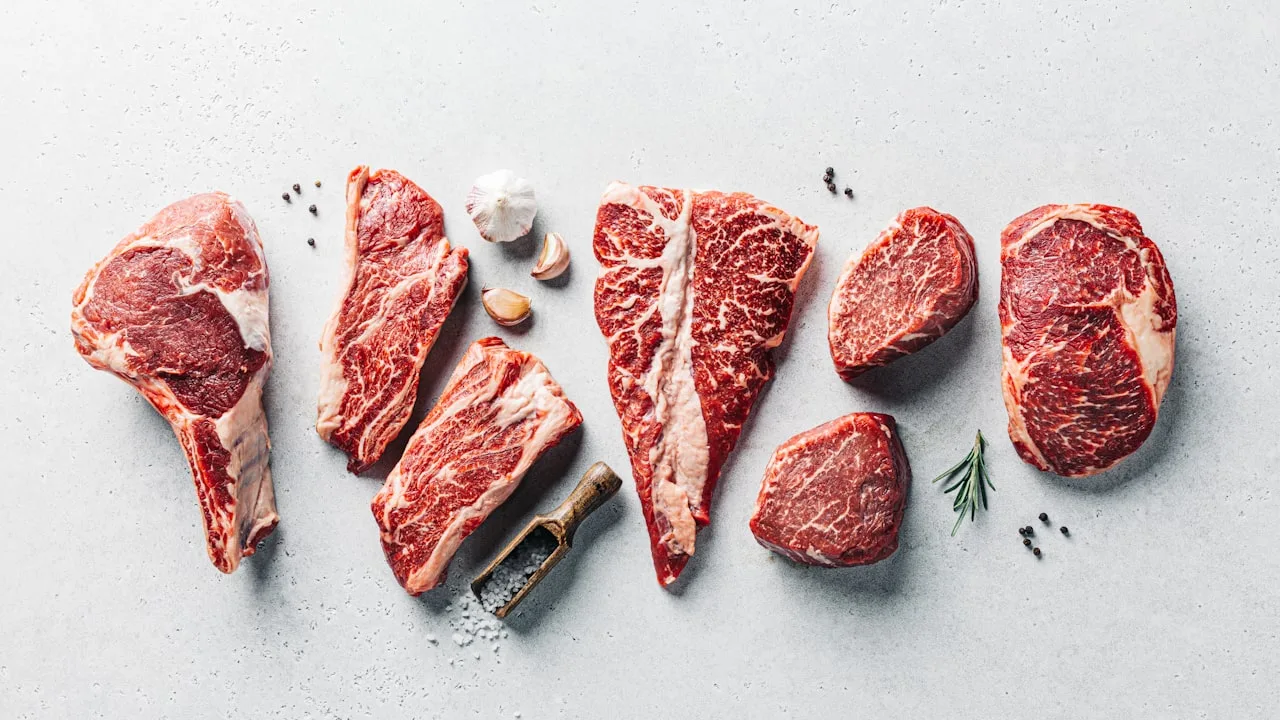
Cooking with patience is not a personality trait or a lifestyle choice. It is a requirement imposed by the chemistry of certain ingredients. Lamb shoulder, octopus, dried legumes, pork belly, salt cod rehydrated and cooked down with tomatoes and potatoes. All of these are either unpleasant or actively inedible if you try to rush them.
Across the Mediterranean, from the Moroccan tagine to the Greek yiouvetsi to the Spanish cazuela, the clay or earthenware pot appears repeatedly. This is not coincidence and it is not aesthetics. Clay conducts heat slowly and unevenly compared with cast iron or stainless steel, which means the temperature inside the pot stays lower and more consistent over time. The ingredients cook in their own steam as well as their own liquid, which concentrates flavour without the aggressive evaporation you get from an uncovered metal pan.
The pot is an ingredient in the same way that time is an ingredient. Remove it and you are making a different dish, even if the recipe looks the same on paper.
A handful of dishes demonstrate the logic particularly clearly, not because they are the most prestigious or the most complex, but because the role of time in each one is impossible to disguise.
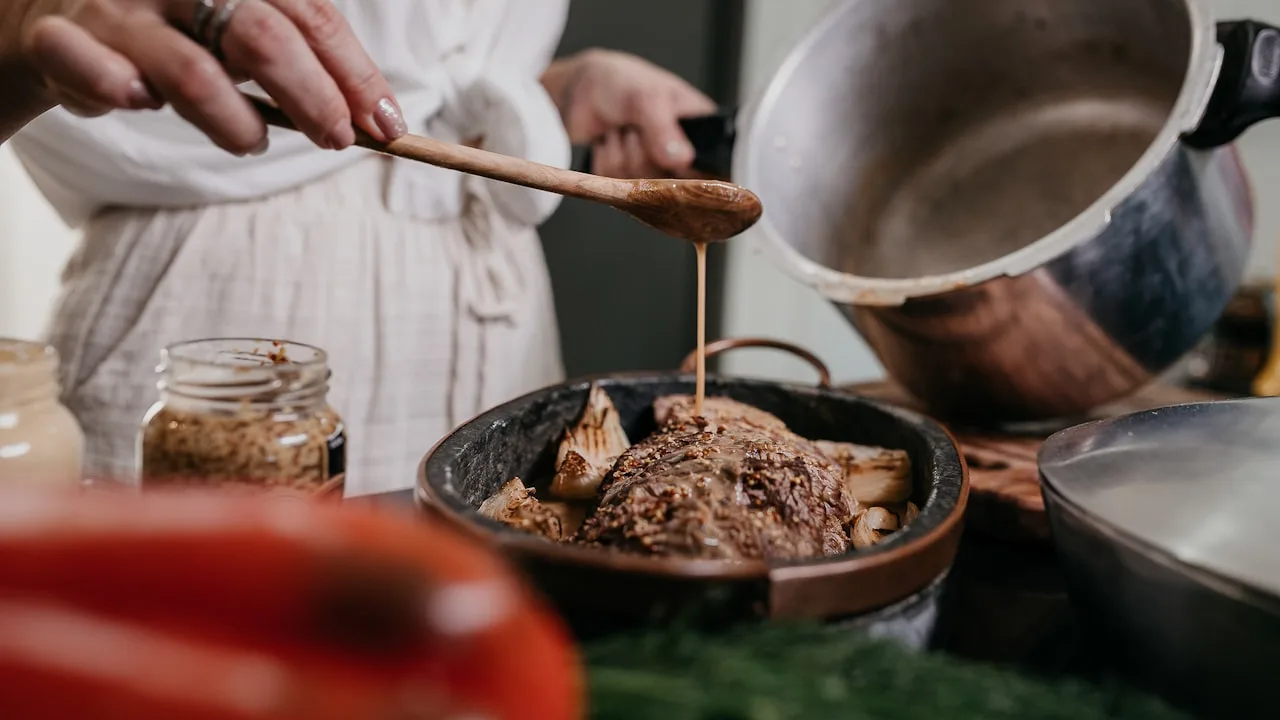
None of this requires you to hover over the stove. Most slow cooked Mediterranean dishes are low-maintenance once they are assembled. The active work is usually thirty minutes or less. You brown the meat, build the base, add the liquid and leave. The oven or the low burner does the rest.
What it does require is planning ahead. Starting a braise the day before you need it is not impractical; it is often preferable, since most of these dishes taste better after a night in the fridge. The fat rises, solidifies and can be skimmed cleanly. The flavours settle. The texture of the sauce changes in a way that reheating at the table cannot replicate from a fresh cook.
This is where the slow food philosophy is most practical and least abstract. It is not asking you to spend more time in the kitchen. It is asking you to reorganise when you spend that time, and to trust that the process you set in motion will do its work without your constant attention.
There is a pressure, not entirely irrational, to make cooking faster. Pressure cookers and instant pots can reduce a four-hour braise to forty-five minutes while still producing collagen breakdown and tender meat. For weeknight cooking, this is a reasonable trade. But the results are not identical to those produced by time honoured cooking methods, and it is worth being honest about that rather than pretending the shortcut is equivalent.
The difference is most obvious in the sauce. Pressure cooking traps all the evaporation that would ordinarily concentrate flavour over several hours. The liquid you put in is roughly the liquid you get out, diluted by juices from the meat. You can reduce the sauce separately afterwards, but you have broken the unified process into two disconnected steps, and something in the coherence of the result reflects that.
That said, knowing when a shortcut is acceptable and when it costs you something essential is a more useful skill than dogmatic adherence to either position. A pressure-cooked bean soup on a Tuesday is better than no bean soup. A hurried daube on Christmas Eve is a missed opportunity you cannot recover.
The dishes that define Mediterranean cooking are not defined by their ingredients alone, or even their technique. They are defined by a relationship with time that their cooks understood, not as a luxury, but as a condition of the result. Whether that still feels reasonable given the shape of your week is the only real question worth asking.

At Med.kitchen, our passion lies in crafting exceptional culinary experiences through our online platform. We specialise in sharing a wealth of knowledge via articles, recipes, courses, and online mentoring, aiming to inspire both novice and seasoned chefs alike. Our focus has shifted from private dining to being an online source of gastronomic inspiration, allowing you to explore and refine your culinary skills from the comfort of your home..