
TL;DR: Swordfish is a beloved part of Maltese cooking, but its mercury levels are real and worth understanding. Eating it occasionally is fine for most adults. Frequency matters most, especially for pregnant women and young children.
Swordfish is genuinely beloved in Malta, and that affection is entirely understandable. It is also a fish that carries measurable mercury levels worth taking seriously, particularly if you eat it regularly.
That tension, between cultural attachment and nutritional caution, is what this post is about. Not to alarm anyone, and certainly not to suggest you abandon pixxispad entirely. But the conversation around swordfish health risks tends to go one of two ways: either it is dismissed as overblown scaremongering, or it gets weaponised into blanket avoidance advice that ignores context entirely. Neither is especially useful.
Malta sits at the heart of the Mediterranean, and its relationship with the sea is not incidental. It is foundational. Swordfish has been caught and eaten here for generations, appearing in everything from simple grilled suppers to more elaborate Maltese swordfish dishes served at family gatherings and restaurant tables alike. The fish is firm, flavourful, and holds up well to strong ingredients like capers, olives, and tomatoes.
Common preparations include swordfish braised in a tomato and caper sauce, grilled steaks with lemon and wild herbs, and thinner cutlets fried simply in olive oil. These are not fringe dishes. They are embedded in everyday cooking, and for many Maltese families, swordfish is as unremarkable and beloved as a Sunday roast might be elsewhere. That cultural weight matters when you are trying to give honest, practical advice.
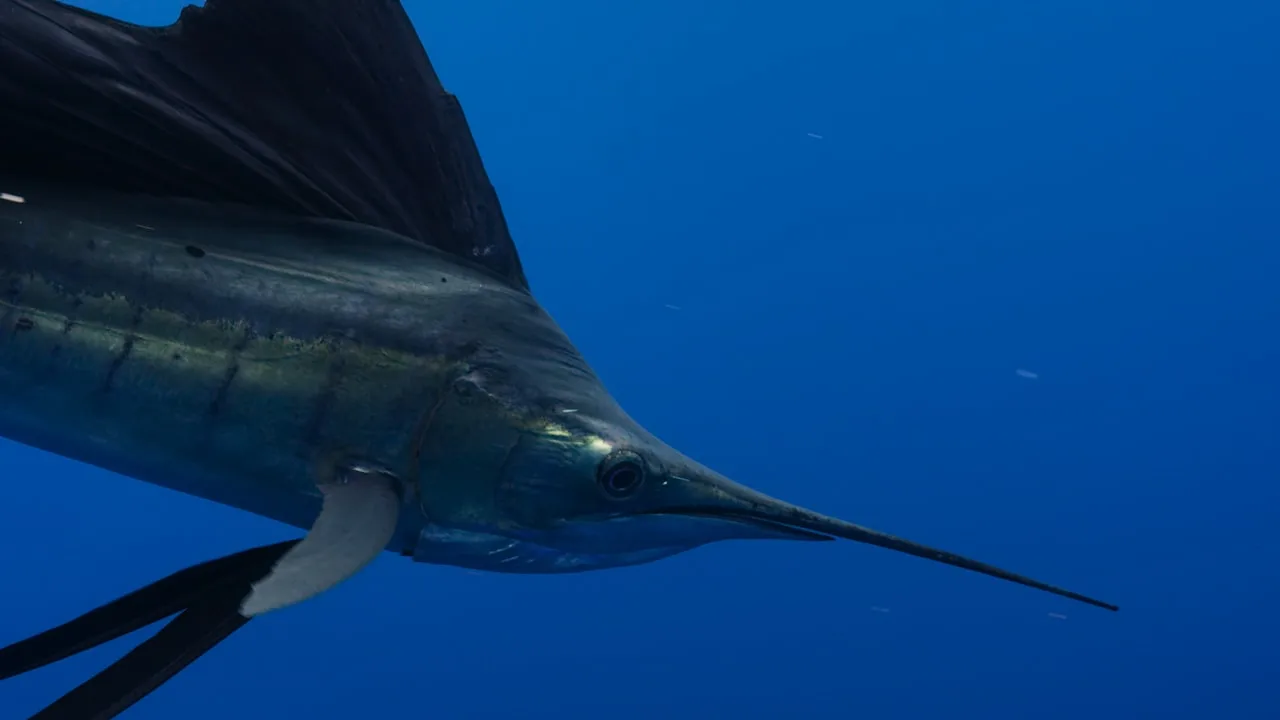
Swordfish is consistently ranked among the highest-mercury fish available. This is not disputed. The reason comes down to a process called biomagnification. Swordfish are apex predators, sitting near the top of the marine food chain, and they accumulate mercury from every smaller fish they consume over their long lifespan. By the time one lands on your plate, it can carry mercury concentrations significantly higher than smaller, shorter-lived species like sardines or mackerel.
The European Food Safety Authority and various national health bodies, including the UK’s NHS, advise limiting swordfish intake precisely because of this. Pregnant women and young children are advised to avoid it altogether. For everyone else, the guidance tends to land around one portion per week as a maximum, though many advisories suggest even less frequent consumption over a sustained period.
Mercury accumulates in the body. A single serving is not a crisis. But regular consumption over months or years, particularly at high portion sizes, can push tissue levels into a range where neurological effects become a genuine concern. That is the actual risk. Not dramatic, not theoretical, but real and dose-dependent.
Yes, for most healthy adults eating it occasionally. The word ‘occasionally’ is doing a lot of work in that sentence, and it deserves unpacking.
Food safety guidance exists on a spectrum, and swordfish sits at a particular point on it. It is not toxic. It is not banned. But it occupies a category, alongside shark and king mackerel, where frequency of consumption is the real variable that determines whether you are eating sensibly or accumulating a problem. The fish itself is nutritionally impressive: high in protein, rich in selenium, a decent source of B12 and omega-3 fatty acids. The nutritional case for eating it is legitimate. The caution is purely about mercury load, not the food matrix itself.
So ‘safe’ is not a binary question here. A more useful framing is: safe under what conditions, for whom, and at what frequency?
This is where abstract guidance needs to become something you can actually apply. Most official bodies suggest no more than one portion per week of high-mercury fish, with swordfish specifically often cited as a fish to eat less frequently than that. A reasonable working rule for a healthy adult with no particular vulnerabilities is: once a fortnight at most, and probably once a month is more comfortable if you are also eating other oily or predatory fish regularly.
If you are eating Mediterranean swordfish recipes two or three times a week because you genuinely love the stuff and it is abundant and affordable locally, that is the scenario worth reconsidering. Not because any individual plate is dangerous, but because the accumulation pattern over time is where the risk lives.
Pregnant women, women planning to become pregnant, breastfeeding mothers, and young children should follow the more conservative guidance, which in most European frameworks means avoiding swordfish entirely. This is one of the clearer, more consistent pieces of dietary advice across jurisdictions, and it is grounded in evidence about developmental neurological risk from methylmercury exposure.
Here is where the cultural piece and the practical piece can actually coexist. The goal is not to eliminate swordfish from the Maltese table. The goal is to think about it the way you might think about any indulgence that carries a real but manageable trade-off.
One approach that works well in practice is treating swordfish as an occasional centrepiece rather than a weeknight staple. When you do eat it, cook it well. Use the classic Maltese preparations that honour the fish. A swordfish braised slowly with tomatoes, olives, and capers on a Sunday afternoon, eaten with good bread and followed by nothing particularly complicated, is a genuinely satisfying meal. Do that once a month, and you are in sensible territory.
On the other nights when you might have reached for swordfish out of habit, consider alternatives that carry far lower mercury loads: fresh sardines, gilt-head bream, mussels, or the smaller Tuna species eaten in moderation. These are all deeply embedded in Maltese cooking too. The cultural pivot does not require abandoning the sea.
The primary concern is methylmercury accumulation. Swordfish are large predatory fish with long lifespans, which means they concentrate mercury from their diet over many years. Regular consumption, particularly over an extended period, can lead to elevated mercury levels in the body. At high enough concentrations, mercury affects the nervous system. The risk is real but dose-dependent, meaning occasional consumption by healthy adults is generally considered acceptable.
Most health authorities advise against swordfish for young children. The developing nervous system is more vulnerable to methylmercury than that of a healthy adult, and the precautionary guidance is fairly consistent across European and international frameworks. Offering lower-mercury fish alternatives is the recommended approach for children.
No. Mercury is bound into the muscle tissue of the fish, and cooking at any temperature does not remove or significantly reduce it. How you prepare the fish has no bearing on its mercury load. The only meaningful variable is how often you eat it and in what quantity.
Some research does suggest that Mediterranean swordfish can carry higher mercury concentrations than Atlantic stocks, likely due to differences in the marine environment and food chain dynamics of the enclosed sea. This is worth bearing in mind for those eating locally caught swordfish in Malta or elsewhere in the region, and it reinforces the case for keeping consumption moderate rather than frequent.
Moderation is one of those words that gets used constantly and defined almost never. In this context, it has a reasonably specific meaning. For a healthy adult with no elevated risk factors, eating swordfish once every two to four weeks, in a normal portion size of around 150 grams, sits within the range most health bodies would consider acceptable. That is not zero. That is not ‘avoid at all costs’. It is a considered, manageable frequency that respects both the cultural value of the dish and the biological reality of mercury accumulation.
The harder question is whether the people eating swordfish regularly are actually tracking their consumption across all high-mercury fish, or whether they are eating swordfish twice a week and also eating Tuna regularly and not thinking about the cumulative picture. That is where the real exposure risk tends to sit, not in the occasional celebratory meal, but in the unreflective habit.
Swordfish moderation advice does not require guilt or dramatic dietary restructuring. It requires awareness, which is the thing most of us are actually missing when we reach a decision that is purely based on what we fancy that evening.
The broader question worth sitting with is this: how many of our food habits are genuinely considered choices, and how many are simply patterns we inherited and never examined? Swordfish in Malta is a good example of a food where the cultural weight is entirely real, the pleasure is entirely valid, and the risk is entirely manageable. But only if you actually think about it.

At Med.kitchen, our passion lies in crafting exceptional culinary experiences through our online platform. We specialise in sharing a wealth of knowledge via articles, recipes, courses, and online mentoring, aiming to inspire both novice and seasoned chefs alike. Our focus has shifted from private dining to being an online source of gastronomic inspiration, allowing you to explore and refine your culinary skills from the comfort of your home..