
TL;DR: The saj, tannour, and open fire did not precede flatbread culture ; they created it. These tools represent accumulated knowledge and environmental intelligence, producing thin, pliable breads still made across Lebanon, Syria, Jordan, and Turkey today.
Before the enclosed oven became the centrepiece of any bakehouse, bread was already ancient, already complex, and already deeply social. The saj, the tannour, and the open fire did not precede bread culture so much as they created it.
There is a tendency, when tracing culinary history, to treat older methods as primitive stepping stones toward something better. That framing is almost always wrong. The flatbreads of the ancient Mediterranean and Near East were not waiting to be improved upon. They were the result of accumulated knowledge, environmental necessity, and remarkable material intelligence. What they lacked in enclosed heat, they made up for in portability, speed, and communal adaptability.
Before exploring the cultural weight these methods carry, it helps to understand what they actually are. Each represents a distinct approach to the same fundamental problem: how do you apply consistent heat to a thin layer of dough without burning it, drying it into a cracker, or leaving it raw in the middle?
The saj is a convex iron griddle, heated from beneath by wood or charcoal. Dough is draped over its dome-shaped surface, cooking quickly through direct radiant and conductive heat. The result is a thin, pliable bread, slightly blistered, with a clean grain flavour. You still find it in daily use across Lebanon, Syria, Jordan, and parts of Turkey. It is not a relic; it is a living tool.
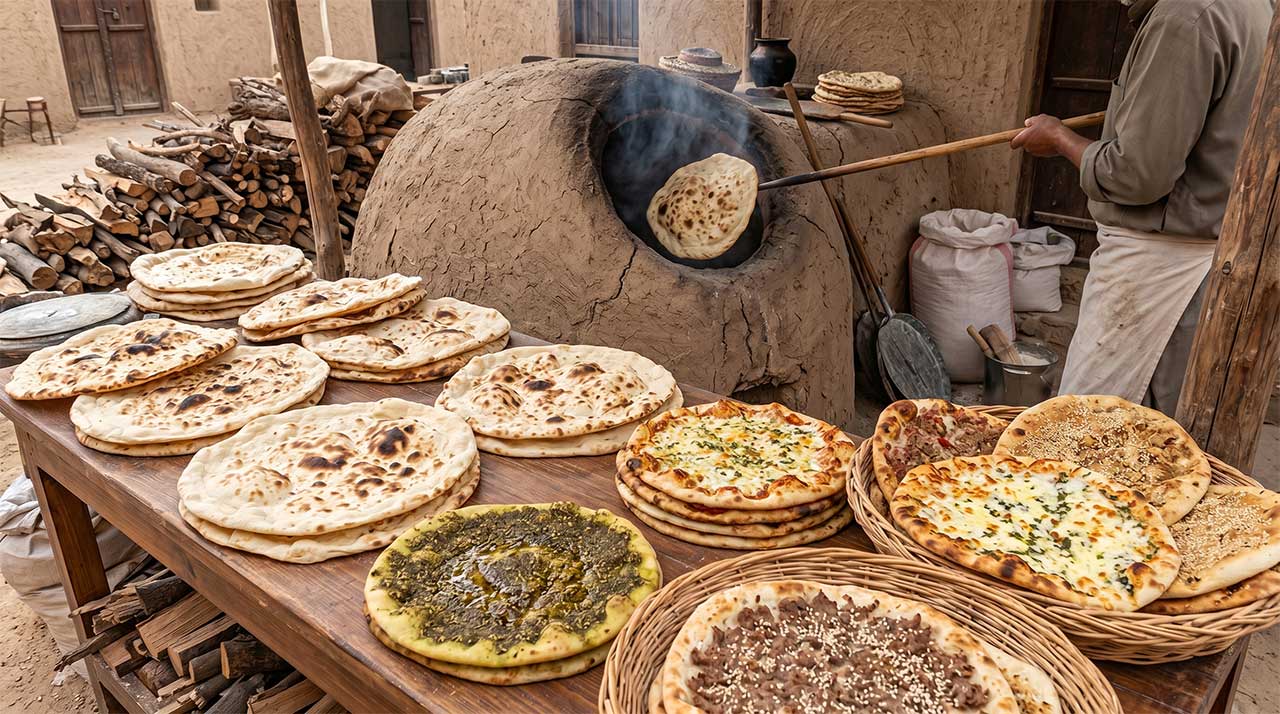
The tannour (closely related to the South Asian tandoor) is a cylindrical clay oven, typically set into the ground or a raised platform. Dough is slapped against its interior walls, where it bakes in seconds from the radiating heat of burning fuel at the base. The tannour creates a bread with more char, more chew, and a distinctive smoky undertone that no enclosed electric oven can convincingly replicate.
Open fire baking, the oldest of all, involves placing dough directly on hot stones or embers, sometimes using flat stones to trap a pocket of steam. It is the method with the fewest variables to control and the most to go wrong. And yet, people mastered it thoroughly enough to feed entire settlements.
The saj’s influence on Mediterranean bread culture is easy to underestimate if you are only thinking about flavour. Its real contribution was social architecture. Because a saj is portable and relatively inexpensive, bread-making was not confined to professional bakers or wealthy households. It moved with people. Nomadic communities, shepherds, and travelling traders could bake fresh bread without settling in one place.
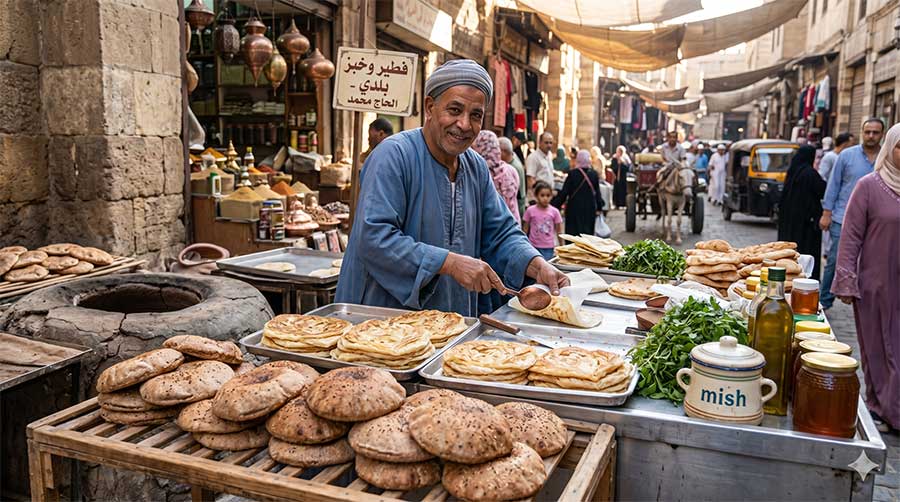
This portability shaped the kinds of bread that became culturally central across the Levant and into the eastern Mediterranean. Thin, flexible, quickly made, long-lasting when dried. These were not compromises; they were features engineered by centuries of use. The saj produced bread that could wrap around food, serve as both plate and utensil, and travel without going stale in the way a leavened loaf would.
There is also something worth observing about the social choreography around a saj. In many communities, it was women who operated them, and the process was rarely solitary. Baking days were collective events, with dough prepared in volume, conversation running alongside the work, and bread shared as it came off the heat. The physical warmth and the communal warmth were inseparable.
The tannour deserves separate consideration because it represents a significant technological commitment. Unlike the saj, which you can pick up and move, a tannour is built. It is set into a structure, carefully constructed from clay that has been mixed with specific materials to improve heat retention and resist cracking. Building one well requires knowledge passed down over generations.
This permanence changed the social meaning of the oven. A tannour was often shared between several households, becoming a fixed point of community life in villages across Mesopotamia, the Levant, and Anatolia. Archaeological evidence from sites in the Fertile Crescent places clay ovens in or adjacent to communal spaces, suggesting that bread production was a shared resource rather than a private act.
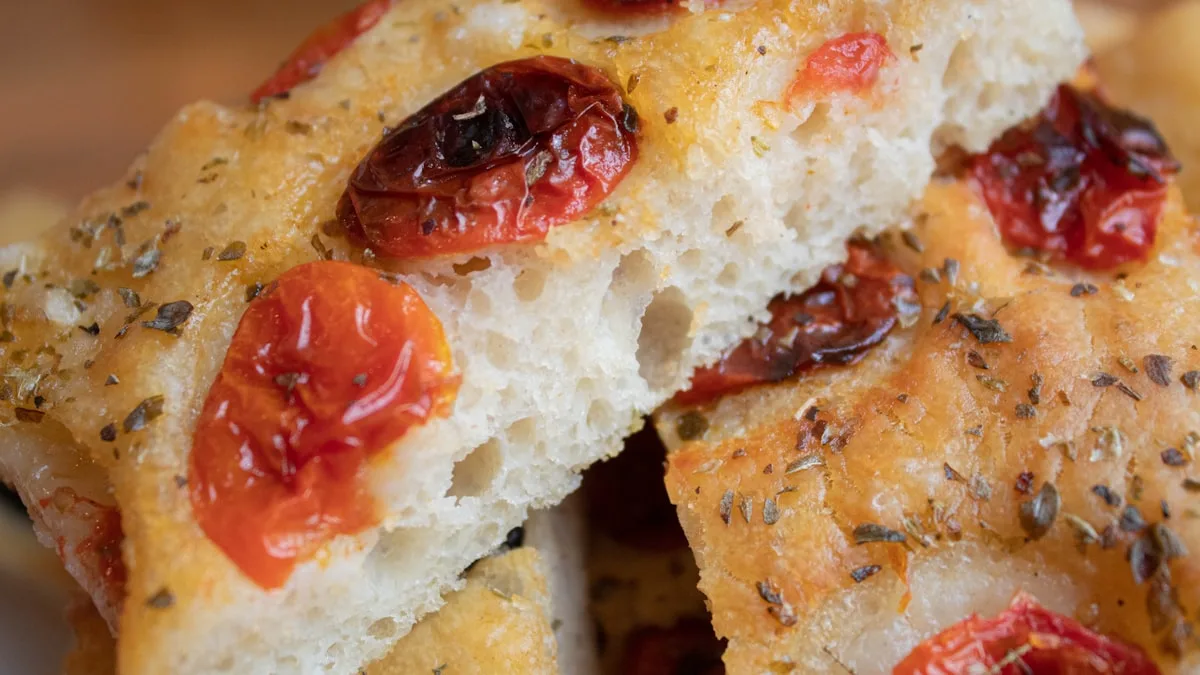
The bread itself carries that heritage. Tannour bread, particularly in its thicker forms, has a structural integrity that saj bread lacks. It can hold up to stews and slow-cooked meats without disintegrating. It chars slightly at the edges, acquires a faint smokiness, and cools into a texture that is simultaneously robust and yielding. This is not accidental. It is the product of an oven designed to do a very specific thing consistently, over many hours of continuous use.
Open fire baking is where the lineage begins. It predates both the saj and the tannour by thousands of years, and its traces appear across nearly every ancient human settlement with evidence of grain consumption. The method is elemental: heat a stone, place dough on it, wait, flip, eat.
What is striking is how rapidly even these earliest flatbreads became sophisticated. Analysis of charred bread fragments found at Shubayqa in Jordan, dating back approximately 14,000 years, suggests that prehistoric bakers were already blending different plant materials, adjusting hydration, and likely fermenting dough in a basic sense. They were not stumbling through trial and error. They were practising something that had already been refined across generations.
Open fire baking also established several principles that the later enclosed oven would build on: the importance of thermal mass, the role of steam in crust formation, and the way different fuels impart different flavour qualities to bread. Everything the wood-fired oven later became famous for was already present, in rougher but recognisable form, in those earliest hearth breads.
The enclosed oven, which allowed bakers to control ambient temperature more precisely and bake leavened loaves with consistent structure, clearly expanded what bread could be. But it did not replace the older methods; it added to them. The saj, the tannour, and the open fire continued in parallel, serving different needs and producing different results.
Part of this persistence is practical. In regions with limited fuel resources, a saj uses heat more efficiently than a large enclosed oven. In communities with specific dietary traditions, the texture and flavour of tannour bread is not a fallback option; it is the preferred outcome. These methods survive not from inertia but from continued relevance.
There is also something resistant to easy replacement in the sensory experience these methods produce. The slight char on a flatbread from a tannour, the faint smokiness in bread baked over embers, the soft pliability of a fresh saj bread still warm from the iron. These are not qualities you replicate in a fan-assisted oven. They are the product of specific heat transfer relationships that the modern kitchen, for all its precision, rarely reproduces.
A saj is a convex iron griddle on which dough is baked from the outside surface, using radiant and conductive heat from below. A tannour is an enclosed clay oven where dough is pressed against the interior walls and bakes from the inside out. The saj produces thinner, more pliable breads; the tannour produces thicker breads with more char and structural density.
Only if sophistication is measured purely by height. Flatbreads involve precise control of hydration, fermentation (in many traditions), heat management, and timing. They are not simpler; they require different skills. The assumption that leavening represents progress misreads what bread is actually for in different contexts.
Archaeological evidence suggests clay-lined pit ovens were in use across the Fertile Crescent by at least 6,000 BCE, possibly earlier. Some researchers argue that precursor forms of enclosed clay baking existed before that, though the evidence becomes harder to interpret the further back you go.
The difference comes from the combination of intense direct heat, smoke from the fuel source, and the clay surface itself. The bread cooks in seconds at very high temperatures, creating a rapid crust with a slightly charred, mineral quality. An enclosed domestic oven operates at lower ambient temperatures and lacks the smoke and clay variables entirely.
The deeper question all of this raises is whether our instinct to trace a linear path from simple to complex, from ancient to modern, actually helps us understand food at all. The flatbreads cooked on a saj in a Lebanese village this morning are not waiting to evolve into something else. They are already exactly what they need to be. That kind of quiet sufficiency tends to outlast a great many things that announced themselves as improvements.

At Med.kitchen, our passion lies in crafting exceptional culinary experiences through our online platform. We specialise in sharing a wealth of knowledge via articles, recipes, courses, and online mentoring, aiming to inspire both novice and seasoned chefs alike. Our focus has shifted from private dining to being an online source of gastronomic inspiration, allowing you to explore and refine your culinary skills from the comfort of your home..